
Brewery Floors: Safe, Hygienic Flooring for NSW Breweries
Running a brewery means a floor that’s constantly wet, regularly hosed down with hot water, hit with spilled wort, sugars and acids, and rolled over by kegs and forklifts. More breweries now welcome visitors too, so the floor also has to be safe underfoot and look the part in the taproom.
The right brewery floor prevents slips, stands up to cleaning chemicals and hot washdowns, and leaves no cracks or joints where bacteria can build up. That helps you meet food safety hygiene expectations, and it saves money on repairs and downtime.
Not sure what suits your site? Call 1800 587 172 for a free, no-obligation consultation.
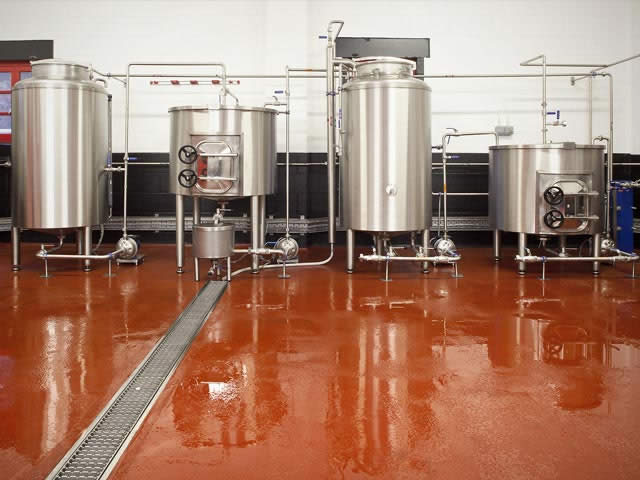
Brewery floors at a glance
- Production areas: polyurethane cement
- Taproom and tasting room: epoxy or polished concrete
- Cold rooms and fast turnarounds: MMA
- Must-haves: slip resistance, seamless finish, heat and chemical resistance
What Makes a Good Brewery Floor?
Slip Resistance, Wet or Dry
Brewery floors are wet most of the day. Anti-slip aggregates such as quartz are broadcast into the coating so staff and visitors keep their footing, without making the floor hard to clean.
Seamless, Full Coverage
Cracks, joints and gaps trap liquid and bacteria. A seamless floor with coved edges at the walls is easier to keep clean and helps you meet food safety hygiene expectations.
Chemical and Acid Resistance
Sugars, acids and strong cleaning chemicals break down bare concrete over time, sometimes called “concrete rot”. A resin floor seals the slab so it isn’t eaten away.
Heat and Thermal Shock
Hot liquids, hot water washdowns and steam cleaning cause sudden temperature changes that crack many coatings. Production floors need to handle that heat repeatedly.
Brewery Floor Options
Polyurethane cement
The heavy-duty choice for brewhouses, fermentation and packaging areas. Polyurethane cement is a thick screed, not a thin coating. It handles hot washdowns, steam cleaning, acids and keg and forklift traffic far better than standard epoxy, because it expands and contracts at close to the same rate as the concrete beneath it. Note that it’s a different product from a polyurethane sealer; see polyurethane cement vs polyurethane sealers. Learn more about polyurethane cement flooring or our own DiamondCrete PU cement.
Epoxy flooring
A strong, seamless coating that bonds well to concrete and comes in a wide range of colours and finishes. That makes it a popular choice for taprooms, tasting rooms and front-of-house areas, where you want the floor to match your branding. Epoxy usually costs less upfront than polyurethane cement, but it’s less suited to areas with constant heat and hot washdowns. See epoxy flooring.
MMA (methyl methacrylate) flooring
A fast-curing resin floor that can return to service within hours and can be installed in cold conditions. It’s useful for cool rooms and for upgrades that have to fit into a short shutdown. MMA is a specialist product and isn’t suited to DIY. See MMA floor covering.
Choosing the Right Floor for Your Brewery
Most breweries end up with more than one system. Weigh up:
| Factor | What to look for |
|---|---|
| Heavy-duty use | Kegs, forklifts and pallet jacks in production areas favour polyurethane cement |
| Chemicals and heat | Acids, cleaning chemicals and hot washdowns also favour polyurethane cement |
| Appearance | For taprooms and tasting rooms, epoxy offers far more colours and finishes |
| Budget | Epoxy costs less upfront; polyurethane cement usually costs less over the life of the floor in harsh areas |
For a deeper comparison, read which is better: epoxy or polyurethane cement?
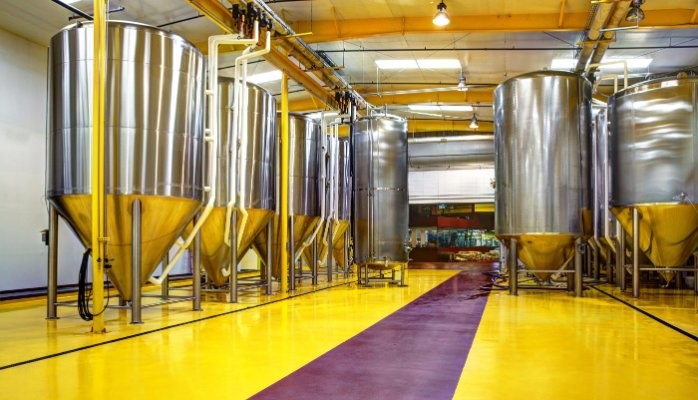
From the team: we plan installs around your brewing cycles, and many of our systems take foot traffic within 12–24 hours, so you’re not out of production for long.
We’re Here to Help
Diamond Grind installs brewery and food-and-beverage floors across Sydney, the Central Coast, Newcastle and regional NSW. We also handle the floor preparation that makes a floor last.
See our wider commercial and industrial flooring services, or our related winery and distillery floors.
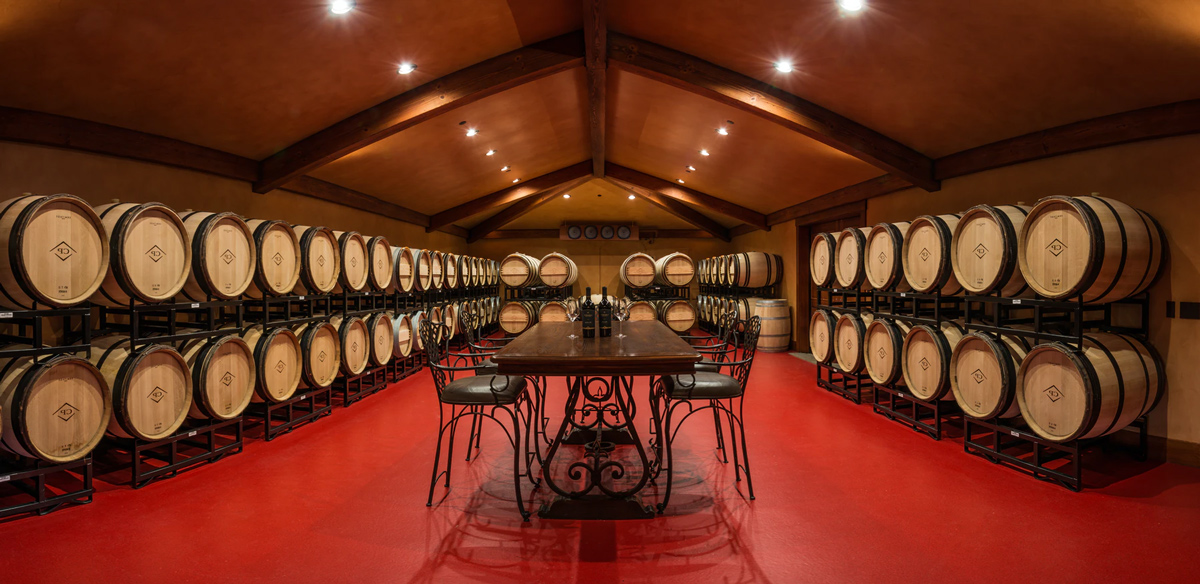
Read more about Brewery Flooring from our Blog.
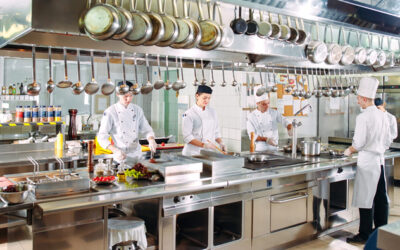
Commercial Kitchen Epoxy Flooring: The Complete Selection & Maintenance Guide
Commercial kitchen environments present extreme operational demands, from hot grease spills to rigorous chemical sanitisation. Installing commercial kitchen epoxy flooring creates a seamless, non-porous surface built for hygiene-focused kitchens. Learn how durable flooring, slip-resistant finishes, and routine epoxy flooring maintenance combine to protect your workforce and streamline hygiene across the food service industry flooring sector.

HACCP Food Safety Flooring: The Complete Compliance Guide
Non-compliant, cracked, or porous commercial floors are major hazard zones for bacterial growth under HACCP auditing. Discover how specialized HACCP food safety flooring solutions protect food processing facilities with seamless, non-porous resin surfaces that support your HACCP program and make audits easier.
Self Draining Floors
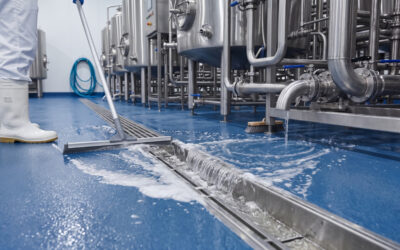
Standing water is a ticking clock for a failed health audit. In busy food and beverage production halls, incorrect floor gradients lead to stagnant pooling, bacterial growth, and dangerous slip hazards. Modern facilities rely on seamless, precision-pitched self draining floors to pull liquids instantly off the surface and straight into the drainage channels. Discover how high-performance polyurethane cement and epoxy systems protect your compliance, safeguard your workers, and slash nightly washdown times.
Brewery Floor FAQs

Q1: What are the key requirements for brewery floors in NSW?
A: Brewery floors need to stay slip-resistant in wet and dry conditions, cover the slab fully with no gaps or cracks, resist moisture, acids and cleaning chemicals, and handle hot liquids and washdowns without cracking. These features reduce slip risk and help you meet food safety hygiene expectations. For non-slip options, see our epoxy flooring page.
Q2: What types of flooring does Diamond Grind recommend for breweries?
A: Polyurethane cement for production areas, thanks to its heat, chemical and impact resistance. Epoxy for taprooms and tasting rooms, where colour and finish matter. MMA for cool rooms or very short shutdowns. For a comparison, read which is better: epoxy or polyurethane cement?
Q3: How do brewery floors handle chemical spills and temperature changes?
A: The right resin floor seals the concrete so acids, sugars and cleaning chemicals can’t soak in and break it down. Polyurethane cement in particular handles hot washdowns and steam cleaning without cracking, because it moves with the concrete as temperatures change.
Q4: How do you make brewery floors slip-resistant in wet conditions?
A: We broadcast anti-slip aggregates such as quartz into the coating and adjust the texture for each area: more grip in wet production zones, a smoother finish in the taproom. That way staff and visitors keep their footing without the floor becoming hard to clean.
Q5: Can you install a new brewery floor without long downtime?
A: Yes. We plan installs around your brewing cycles, and many of our systems, including DiamondCrete, take foot traffic within 12–24 hours. For very short shutdowns or cold rooms, fast-curing MMA can return to service within hours.
Q6: Why choose professional installation for brewery flooring in Sydney or the Central Coast?
A: Professional installation means proper surface preparation, correct mixing and a seamless, well-bonded finish that lasts. Our team keeps downtime to a minimum and delivers a tough, low-maintenance floor. For industrial examples, see our commercial and industrial flooring page.
Q7: How can I get expert advice on brewery floors in NSW?
A: Call Diamond Grind on 1800 587 172 for a free, no-obligation consultation. We’ll look at your site and recommend the right system for each area, serving Sydney, the Central Coast and surrounding areas.
✅ Let's Talk — DiamondGrind
100% free consultation — no commitment required.