
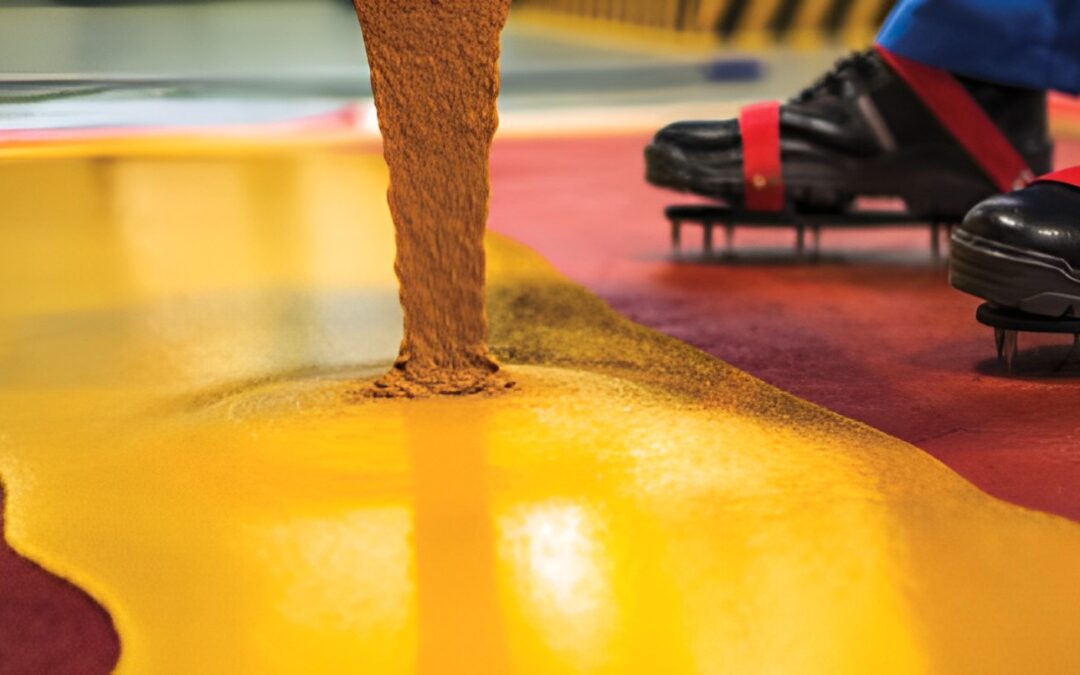
Struggling to choose the perfect floor coating for your industrial or commercial facility? Epoxy and polyurethane are two of the most popular, high-performance seamless flooring systems available today. When clients ask us which is better, epoxy or polyurethane, the answer comes down to your facility’s specific operational demands, thermal exposure, and hygiene requirements.
A common misconception across commercial industries is assuming all seamless floor coatings are simply “epoxy.” In reality, both belong to the resin family, but their physical properties and application zones differ significantly. This guide breaks down the key technical differences so you can decide which is better, epoxy or polyurethane, for your concrete slab.
Quick Comparison: Epoxy vs. Polyurethane Cement
To quickly see which is better, epoxy or polyurethane, review this feature comparison table before diving into the full technical specifications:
| Feature | Polyurethane Cement Screeds | Standard Epoxy Floor Coatings | Best Suited Application |
|---|---|---|---|
| Durability & Impact | Superior; flexible matrix withstands heavy machinery, dropped equipment, and severe impact. | Excellent; ultra-hard finish, durable under heavy wheeled and vehicle traffic. |
Polyurethane: Heavy manufacturing, commercial kitchens. Epoxy: Warehouses, workshops, dry assembly. |
| Chemical Resistance | Exceptional; highly resistant to aggressive organic acids, hot fats, alkalis, and solvents. | Good; resistant to mineral oils, mild acids, solvents, and general cleaning chemicals. |
Polyurethane: Food & beverage processing, chemical plants. Epoxy: Automotive workshops, showrooms, hangars. |
| Thermal Shock Resistance | Extreme; withstands direct steam cleaning and boiling washdowns up to 120°C. | Moderate; softens or delaminates when exposed to temperatures exceeding 60°C. |
Polyurethane: Freezers, bakeries, hot-wash lines. Epoxy: Ambient temperature commercial areas. |
| Substrate Tolerance | High; superior adhesion to concrete, even on slightly damp slabs. | Requires dry concrete; vulnerable to moisture vapor outgassing. |
Polyurethane: Fast-turnaround refurbishments. Epoxy: Fully cured, dry concrete slabs. |
| Aesthetic Options | Functional, low-sheen textured finishes (matte/satin anti-slip profiles). | Vast range of high-gloss colours, decorative flakes, and metallic/quartz finishes. |
Polyurethane: Industrial, compliance-heavy zones. Epoxy: Showrooms, retail, decorative spaces. |
| System Composition | 4-Part Kit (Resin, Hardener, Aggregate/Cement Filler, Colour Pack). | 2-Part Kit (Base Resin and Amine Hardener). |
Polyurethane: Heavy-duty trowelled screed (3mm–9mm). Epoxy: Roll-on or self-levelling coat (1mm–3mm). |
| Upfront Cost & Value | Higher upfront investment; delivers longest lifespan in extreme conditions. | More cost-effective upfront; ideal for budget-conscious dry spaces. |
Polyurethane: Maximum long-term ROI in harsh zones. Epoxy: Lower initial cost for general commercial spaces. |
Deep-Dive: Material Performance Breakdown
Polyurethane Cement Coatings: Unmatched Heavy-Duty Performance
When evaluating which is better, epoxy or polyurethane, it is important to understand that polyurethane cement flooring systems are heavy-duty, polymer-modified cementitious screeds engineered for the most demanding commercial environments. Applied thick (typically 3mm to 9mm), a polyurethane cement formulation consists of a specialized 4-part system: base resin, hardener, aggregate/cement filler, and a pigment pack.
Consider these key operational advantages of polyurethane cement:
- Thermal Shock Immunity: Unlike standard epoxy coatings that soften above 60°C, polyurethane cement expands and contracts at a rate similar to concrete. It withstands rapid temperature swings, steam cleaning, and boiling water washdowns up to 120°C without cracking or peeling.
- HACCP Certified Hygiene: Polyurethane cement screeds are certified by HACCP for use in food and beverage facilities. Formulated to inhibit bacterial, fungal, and mould growth, they provide a seamless barrier that meets strict council health regulations.
- Resistance to Lactic Acids & Organic Fats: Polyurethane cement exhibits outstanding resistance to aggressive chemicals, including animal fats, hot oils, citric juices, and lactic acids that rapidly degrade standard concrete sealers.
- Damp Substrate Tolerance: Polyurethane cement exhibits superior adhesion to concrete, performing reliably even when the underlying slab is slightly damp or experiencing higher moisture vapor emissions.
- Low Odour Application: Fast-curing water-based polyurethane systems release negligible VOCs and zero harsh odours during installation, allowing for fast turnarounds with minimal disruption to adjacent operations.
Epoxy Floor Coatings: Versatility, Hardness & Aesthetic Control
For facility owners asking which is better, epoxy or polyurethane for dry commercial zones, epoxy floor coatings offer a thermosetting polymer solution created by mixing a base epoxy resin with an amine hardener. Applied as a thin-film high-build coating or self-levelling slurry (1mm to 3mm), epoxy is celebrated across industries for its versatility and extreme surface hardness.
Key benefits of professional epoxy resin installations include:
- Exceptional Tensile Strength & Mechanical Bond: When applied over mechanically prepared concrete, epoxy forms an unbreakable physical bond with the open pores of the slab.
- Cost-Effective Upfront Protection: Epoxy resin remains one of the most budget-friendly solutions for sealing large commercial footprints against dust, wear, and light chemical spills.
- High Aesthetic Versatility: Available in virtually unlimited colours, high-gloss finishes, decorative quartz, and vinyl flake systems, epoxy allows business owners to match corporate branding or create decorative retail environments effortlessly.
- Ideal for Dry Industrial Zones: Epoxy coatings excel in aviation hangars, automotive workshops, logistics warehouses, and dry manufacturing plants where heavy rolling loads and vehicle tires dominate daily operations.
Installation, Materials & Maintenance
Professional Concrete Preparation: The Key to Longevity
Regardless of which is better, epoxy or polyurethane, for your facility, overall system performance relies entirely on proper surface preparation. Applying resin over unconditioned, smooth, or contaminated concrete leads to premature adhesion failure.
At Diamond Grind, every installation begins with mechanical preparation. We utilize industrial diamond grinding equipment to open concrete pores, remove surface contaminants, and achieve an ICRI Concrete Surface Profile (CSP) tailored to the specified resin thickness. Learn more about our specialized floor preparation services.
Proven Materials from Industry-Leading Suppliers
To ensure long-lasting durability, Diamond Grind strictly installs tested, high-grade resin products from Australia’s premier chemical manufacturers, including Hychem, EpiMax, Flowcrete, and Sika / Master Builders Solutions.
Maintenance Requirements for Resin Systems
Both epoxy and polyurethane cement floors require simple maintenance to maximize their operational lifespan. Daily cleaning should involve sweeping debris and washing with pH-neutral detergent solutions. For high-temperature polyurethane cement floors in food processing areas, low-pressure hot water washdowns keep surfaces hygienic, non-slip, and free of organic buildup.
Final Decision: Which is Better, Epoxy or Polyurethane?
There is no universal “winner”—determining which is better, epoxy or polyurethane, depends entirely on three operational factors:
- Will the floor face hot water washdowns, steam, or thermal cycling? Polyurethane is significantly better. It is essential for commercial kitchens, breweries, bakeries, and washdown lines.
- Is visual customization, high gloss, or lower initial budget your priority? Epoxy is better. It is ideal for showrooms, retail stores, dry storage warehouses, and commercial garages.
- What type of chemical exposure will be present? Choose Polyurethane for organic food acids, hot fats, and harsh washdown chemicals; choose Epoxy for mineral oils, solvents, and general commercial cleaning agents.
Still Unsure Which Flooring System Your Slab Requires?
If you are still evaluating which is better, epoxy or polyurethane, for your space, don’t leave your floor investment to guesswork—get tailored technical advice directly from trade specialists! Contact Diamond Grind today for a free, no-obligation site assessment and estimate. We will inspect your concrete slab, review your operational demands, and recommend the exact resin specification to future-proof your facility.
Call our specialist support team today on 1800 587 172 or send us an inquiry through our contact page.
FAQ,s

What is the main difference between epoxy and polyurethane cement flooring in terms of durability?
Polyurethane cement offers superior durability for extreme conditions, withstanding heavy impacts, abrasions, and traffic from machinery better than epoxy, which provides strong bonding and reliability for moderate to heavy use. This makes polyurethane ideal for high-demand NSW industries like manufacturing or food processing.
Polyurethane cement offers superior durability for extreme conditions, withstanding heavy impacts, abrasions, and traffic from machinery better than epoxy, which provides strong bonding and reliability for moderate to heavy use. This makes polyurethane ideal for high-demand NSW industries like manufacturing or food processing.
Which flooring type has better chemical and thermal resistance for harsh environments?
Polyurethane cement excels in chemical resistance to aggressive acids, alkalis, solvents, and oils, plus high thermal shock tolerance for temperature swings—perfect for breweries, freezers, or bakeries in Sydney. Epoxy handles mild chemicals well but is less suited to extremes. Choose based on your facility’s exposure; for HACCP-compliant options, explore our Polyurethane Cement Flooring page.
Polyurethane cement excels in chemical resistance to aggressive acids, alkalis, solvents, and oils, plus high thermal shock tolerance for temperature swings—perfect for breweries, freezers, or bakeries in Sydney. Epoxy handles mild chemicals well but is less suited to extremes. Choose based on your facility’s exposure; for HACCP-compliant options, explore our Polyurethane Cement Flooring page.
How do epoxy and polyurethane cement compare in cost, installation, and aesthetics?
Epoxy is more cost-effective upfront with versatile aesthetics like colors, flakes, or quartz for showrooms and retail, but installation may take longer. Polyurethane cement has a higher initial cost yet faster curing and minimal downtime, though with functional finishes over decorative ones. Both offer long-term value—visit our Epoxy Flooring page for aesthetic ideas.
Epoxy is more cost-effective upfront with versatile aesthetics like colors, flakes, or quartz for showrooms and retail, but installation may take longer. Polyurethane cement has a higher initial cost yet faster curing and minimal downtime, though with functional finishes over decorative ones. Both offer long-term value—visit our Epoxy Flooring page for aesthetic ideas.
Which is better overall, epoxy or polyurethane cement for my NSW project?
Neither is universally better—it depends on needs: polyurethane cement for heavy-duty, chemical-heavy, or thermal-variable settings like food and beverage; epoxy for budget-friendly, visually appealing spaces like workshops. Call us at 1800 587 172 for a 100% free consultation to assess your Sydney or regional NSW site!
Neither is universally better—it depends on needs: polyurethane cement for heavy-duty, chemical-heavy, or thermal-variable settings like food and beverage; epoxy for budget-friendly, visually appealing spaces like workshops. Call us at 1800 587 172 for a 100% free consultation to assess your Sydney or regional NSW site!
✅ Let's Talk — DiamondGrind
100% free consultation — no commitment required.