

Knowing how to clean polished concrete floors properly is the key to keeping that freshly polished look for years. Polished concrete is a premium choice for homes, shops, offices and industrial sites. It’s tough and low-maintenance, and it can last the life of the building. Its light-reflecting finish also makes any space feel brighter and is a pleasure to walk on.
The most common question our clients ask is how hard it is to keep the floor looking “just polished”. The short answer is that it’s not hard at all, but it does need regular attention. Below, the Diamond Grind team explains how to clean polished concrete floors with simple daily, weekly and monthly routines, and when a professional re-polish makes sense.
Why Polished Concrete Floors Lose Their Shine
Polished concrete usually starts to look dull for two reasons: a build-up of dust and grime, and fine scratches caused by grit dragged across the surface. A third, less obvious cause is residue left behind by the wrong cleaning products.
Every tip below is about reducing these problems. The golden rule when working out how to clean polished concrete floors is routine. Don’t wait for the floor to look dirty before you clean it.
How to Clean Polished Concrete Floors in 7 Steps
1. Dust Mop Every Day
Grit acts like sandpaper underfoot. At the end of each day, run a microfibre or cotton dust mop over the floor to pick up dust and grit before they scratch the surface. Busy commercial spaces may need this more than once a day. Avoid stiff-bristled brooms, which tend to push grit around rather than lift it.
2. Damp Mop Weekly with a pH-Neutral Cleaner
What is a pH-neutral cleaner? It’s a gentle floor cleaner that’s neither acidic like vinegar or lemon juice, nor harsh like bleach. It’s close to plain water in strength, so it lifts dirt without damaging the floor. It’s also not the same as soap. Dishwashing liquid and soapy cleaners leave a dull film on polished concrete, while a good pH-neutral floor cleaner rinses away cleanly. When shopping, look for “pH neutral”, “low residue” or “safe for polished concrete” on the label.
This is the core of how to clean polished concrete floors week to week. If you’ve kept up the daily dust mopping, it should be a quick job:
- Dust mop first to remove any loose grit.
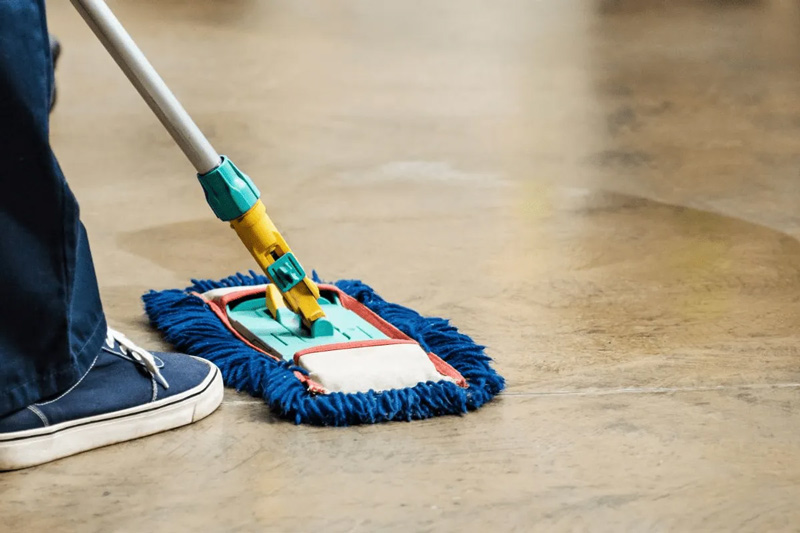
- Damp mop with warm water and a pH-neutral cleaner made for polished concrete, working section by section. The mop should be damp, not soaking.
- Change the water often so you’re not spreading dirty water and grit across the floor.
- Rinse with clean water if your cleaner requires it, then dry buff with a clean microfibre pad to remove streaks and residue.
For large commercial areas, an auto-scrubber fitted with soft pads and a neutral cleaner does the same job much faster.
3. Burnish Monthly to Restore Lustre
This step is often overlooked by people learning how to clean polished concrete floors, but it makes a noticeable difference. Burnishing with diamond-impregnated cleaning pads removes light marks and brings back the shine using just water. Each pass refines the surface slightly, keeping the finish consistent.
Monthly burnishing suits high-traffic and commercial floors. In homes, it’s usually only needed occasionally, and hiring a machine or booking a maintenance clean is more practical than buying one.
4. Clean Up Spills Straight Away
Concrete is naturally porous. Even sealed polished concrete can stain or etch if spills are left too long. Acidic spills such as wine, fruit juice, soft drinks, vinegar and citrus are the most damaging, and oils and grease can also leave marks. Wipe spills up immediately with a soft cloth, then clean the area with a pH-neutral cleaner.
5. Use Entry Mats
Most of the grit that scratches polished concrete is carried in on shoes. Place mats inside and outside entry doors to catch it before it reaches the floor. Clean or shake out the mats regularly, because a dirty mat traps grit that can end up back on your polished surface.
6. Protect the Surface from Scratches
Fit felt pads under chair and table legs, and lift furniture rather than dragging it. In commercial spaces, use trolleys with soft or rubber wheels. In warehouses and workshops, regular dust mopping around machinery and loading areas makes a big difference.
7. Book a Professional Re-Polish When Needed
Knowing how to clean polished concrete floors will slow wear, but floors in high-traffic areas will eventually need a refresh. Busy commercial floors may need attention every couple of years, while residential floors can usually go considerably longer. Re-polishing requires specialist equipment and experience. Diamond Grind’s team will:
- Assess the condition of your floor and the level of wear.
- Grind back the surface if deeper scratches need removing or more aggregate exposure is wanted.
- Re-polish and reseal floors in good condition to bring back a like-new finish.
Large Commercial Floors: Use an Auto-Scrubber
In shops, showrooms and warehouses, hand mopping just spreads dirty water around. An automatic floor scrubber with soft, non-abrasive pads (white or red) cleans large areas evenly. Never use black stripping pads on polished concrete.
How to Remove Stains from Polished Concrete
Spills happen. Blot liquids straight away rather than rubbing them in, because acidic spills like wine, citrus or vinegar can etch the polish if they’re left to sit.
- Oil and grease: apply a concrete-safe alkaline degreaser or an oil-drawing poultice, leave it to work, then scrub gently with a soft brush and rinse.
- Food and drink: apply a pH-neutral cleaner, leave it for a few minutes to break down fats, scrub gently and wipe dry.
- Etching or stubborn stains: these need professional buffing or spot re-polishing. See polished concrete restoration.
What Not to Use on Polished Concrete Floors
Part of knowing how to clean polished concrete floors is knowing what to avoid. These products and tools can dull, etch or damage the surface:
- Acidic cleaners, including vinegar, lemon juice and citrus-based products.
- Soap, dishwashing liquid and soap-based or wax cleaners, which leave a dull film that attracts dirt.
- Bleach, ammonia and harsh degreasers not made for polished concrete.
- Abrasive scourers, steel wool or stiff scrubbing brushes.
- Soap-based or wax cleaners, which leave a film that attracts dirt.
- Soaking-wet mops that leave water sitting on the surface.
| Do | Don’t |
|---|---|
| Use a pH-neutral cleaner | Use vinegar, citrus or bleach |
| Dust mop with microfibre | Scrub with steel wool, wire brushes or black pads |
| Put felt pads under furniture | Drag heavy items across the floor |
Designing a Polished Floor That’s Easier to Clean
Easy maintenance starts at the design stage. Decorative saw-cut lines collect dust in busy areas, so keep them to a minimum in high-traffic zones, and put good walk-off mats at every entrance. For ongoing care, see our polished concrete maintenance service.
Polished Concrete Floor Maintenance Made Simple
Once you understand how to clean polished concrete floors, maintenance becomes common sense. Remove grit daily, clean gently each week, deal with spills quickly and keep an eye on high-traffic areas. Stick to that routine and your floor will hold its shine for years.
If your floor has lost its lustre, or you’d like advice on the right maintenance plan for your home or business, contact Diamond Grind. We specialise in polished concrete and can restore, re-polish and protect your floor.
Polished Concrete Cleaning FAQs

Q1: What is the best cleaner for polished concrete floors?
A: The best cleaner is a pH-neutral cleaner made for polished concrete, mixed with warm water. Avoid acidic products like vinegar or citrus cleaners, as well as bleach and ammonia, because they can etch and dull the surface over time.
Q2: How often should you clean polished concrete floors?
A: Dust mop daily, damp mop weekly with a pH-neutral cleaner, and burnish high-traffic areas about once a month. That simple routine is the easiest way to learn how to clean polished concrete floors and keep them looking freshly polished. Busy commercial floors may also need a professional re-polish every couple of years.
Q3: Can you use vinegar to clean polished concrete?
A: No. Vinegar is acidic and can etch polished concrete, leaving dull patches and damaging the sealer. Stick to warm water and a pH-neutral cleaner instead.
Q4: How do you bring the shine back to a dull polished concrete floor?
A: Start with a thorough clean using a pH-neutral cleaner, then burnish the floor with diamond-impregnated pads. If the floor is still dull or scratched, it likely needs a professional re-polish. Once the shine is back, knowing how to clean polished concrete floors with a regular routine will help it last.
Q5: Can you steam-clean or mop polished concrete with hot water?
A: Use cool or lukewarm water with a pH-neutral cleaner. Occasional steam cleaning is fine, but regular high heat and moisture can wear down the protective sealer over time.
Q6: How do you remove oil stains from a polished concrete garage floor?
A: Mop up excess oil straight away. Apply a concrete-safe alkaline degreaser or an oil-drawing poultice, leave it for 15–20 minutes, scrub gently and rinse with clean water.
✅ Let's Talk — DiamondGrind
100% free consultation — no commitment required.