
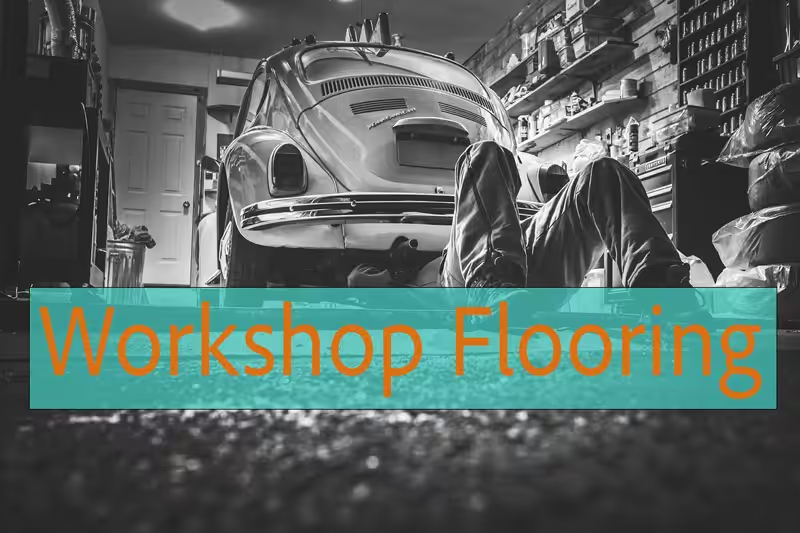
The Practical Guide to Mechanical Workshop Flooring
When it comes to setting up a profitable, safe, and efficient mechanical garage, your choice of workshop flooring is one of the most critical infrastructure investments you will make. The right surface doesn’t just look professional—it actively shields your structural slab from catastrophic degradation, ensures workplace safety compliance, and reduces long-term maintenance overheads. At Diamond Grind, we specialise in specifying and installing commercial-grade surfaces tailored specifically for the punishing demands of automotive environments.
Why Specialised Workshop Flooring is Non-Negotiable
Standard concrete slabs quickly fail in a mechanical environment. Slabs absorb oils, crack under heavy point loads, and create fine concrete dust that can contaminate sensitive engine components. Investing in specialised workshop flooring provides four vital structural protections:
- Extreme Durability & Point-Load Resistance: Automotive garages subject floors to immense concentrated weight from heavy vehicles, car hoists, heavy-duty tool chests, and steel-wheeled jacks. Our systems prevent concrete spalling and cracking.
- Total Chemical & Fluid Immunity: Corrosive fluids like brake cleaner, engine oil, petrol, hot coolant, and transmission fluid are daily realities. Specialised coatings ensure these fluids sit on top of the membrane for effortless cleanup rather than soaking into the concrete.
- Advanced Workplace Safety: Grease and oil spills turn standard concrete into an incredibly dangerous liability. Our floors are engineered with custom slip-resistant textures to keep your mechanics safe and stable underfoot.
- Dust Elimination & Simplified Maintenance: Raw concrete constantly releases fine dust as it wears. Our seamless sealers trap dust completely, requiring only a simple daily sweep and mop to maintain a pristine, dealership-quality look.
Top Heavy-Duty Options for Your Workshop Flooring
Depending on the specific workflows of your facility, Diamond Grind offers three primary workshop flooring systems engineered for automotive environments:
1. Industrial Epoxy Flooring: The Automotive Service Bay Standard
For standard mechanical service bays, tyre centres, and dealership workshops, epoxy flooring remains the industry benchmark. It cures into an incredibly tough, high-gloss, non-porous membrane that reflects overhead lighting—instantly brightening your workspace. Epoxy easily withstands daily tool drops, heavy machinery traffic, and chemical exposures while allowing you to map out permanent, bright safety lines and designated work bays.
2. Polyurethane Cement: Engineered for Heavy Fleets and Welding Zones
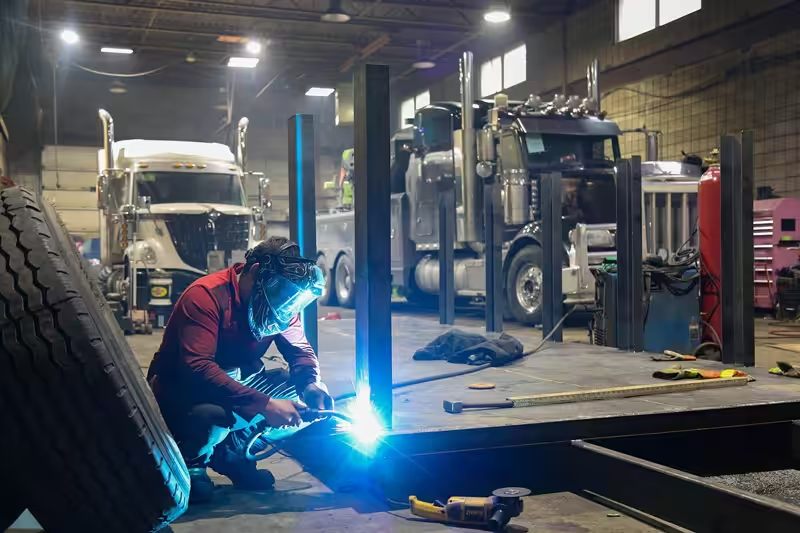
If you operate a heavy vehicle workshop, fabrication facility, or machining plant, polyurethane cement is the ultimate option. This ultra-heavy-duty system handles intense physical impacts, steel-tracked equipment, and localised thermal shock (such as exposure to welding sparks or hot exhausts) without bubbling, cracking, or losing its bond with the slab.
3. Commercial Polished Concrete: Low Lifecycle Costs for Support Zones
For customer reception areas, parts counters, showrooms, and dry storage walkways, polished concrete offers exceptional value. It provides a sleek, modern aesthetic that handles high foot traffic beautifully for decades with virtually zero maintenance. While it offers slightly less stain protection against prolonged raw oil pooling compared to resin coatings, its extreme wear resistance makes it a highly economical choice for your customer-facing spaces.
Tailoring the Solution to Your Specific Facility Layout
At Diamond Grind, we recognise that a single facility often requires a hybrid strategy rather than a one-size-fits-all approach to workshop flooring. For example, a comprehensive workshop layout often includes:
- The Main Service Bays: Finished in a high-build, light-grey epoxy with a tailored slip-resistant profile to maximise light reflectivity and chemical immunity.
- The Fabrication & Welding Bay: Finished in a high-thickness polyurethane cement layer to easily handle heavy metal impacts and high-heat slag.
- The Customer Showroom & Amenities: Finished in low-VOC, high-durability mechanical polished concrete to project a premium, clean brand image to visiting clients.
With years of elite execution across the entire Sydney Metro area and regional NSW, our professional team ensures flawless surface preparation and meticulous installation to guarantee your floor never peels, cracks, or fails prematurely.
Transform Your Workshop Layout Today
Ready to upgrade your garage into a clean, safe, high-performance workspace? Contact the Diamond Grind team today or call us on 1800 587 172 to arrange a professional site inspection and tailored quote for your facility.
FAQ,s

Can you install epoxy or polyurethane over an old concrete floor that is already saturated with oil and grease?
Yes, but it requires highly specialized surface preparation. You cannot simply pour coatings over oil-stained concrete, or your workshop flooring will peel instantly. At Diamond Grind, we use industrial degreasers, hot water pressure extraction, and advanced dustless diamond grinding machinery to completely strip away the oil-contaminated top layer of the slab. Once we reach clean, porous, virgin concrete, we apply specialized oil-tolerant primers that create an unbreakable bond, transforming an old greasy floor into a flawless new asset.
Yes, but it requires highly specialized surface preparation. You cannot simply pour coatings over oil-stained concrete, or your workshop flooring will peel instantly. At Diamond Grind, we use industrial degreasers, hot water pressure extraction, and advanced dustless diamond grinding machinery to completely strip away the oil-contaminated top layer of the slab. Once we reach clean, porous, virgin concrete, we apply specialized oil-tolerant primers that create an unbreakable bond, transforming an old greasy floor into a flawless new asset.
How well does epoxy flooring hold up against heavy tool drops and jack stands?
Commercial-grade industrial epoxy is remarkably resilient, but it is not completely indestructible against deliberate abuse. Our high-build epoxy installations are designed to absorb daily impacts from dropped spanners, heavy sockets, and rolling jack stands without chipping. However, dragging sharp steel components or dropping heavy brake rotors from high distances can cause localized cosmetic gouges. For zones subjected to constant heavy impact or dropped steel fabrications, we highly recommend our thicker polyurethane cement systems.
Commercial-grade industrial epoxy is remarkably resilient, but it is not completely indestructible against deliberate abuse. Our high-build epoxy installations are designed to absorb daily impacts from dropped spanners, heavy sockets, and rolling jack stands without chipping. However, dragging sharp steel components or dropping heavy brake rotors from high distances can cause localized cosmetic gouges. For zones subjected to constant heavy impact or dropped steel fabrications, we highly recommend our thicker polyurethane cement systems.
What level of slip-resistance should a mechanical garage floor have?
Workplace safety laws in Australia require commercial workshops to maintain strict slip-resistance standards (AS 4586), especially in environments where liquid contamination is likely. During the final application phase, Diamond Grind can strictly customize the texture of your floor by broadcasting specialized aggregates (like aluminum oxide or quartz sand) directly into the topcoat. We generally aim for a certified P4 or P5 slip rating in high-risk service bays to ensure your mechanics retain solid traction even if oil or water is temporarily spilled on the surface.
Workplace safety laws in Australia require commercial workshops to maintain strict slip-resistance standards (AS 4586), especially in environments where liquid contamination is likely. During the final application phase, Diamond Grind can strictly customize the texture of your floor by broadcasting specialized aggregates (like aluminum oxide or quartz sand) directly into the topcoat. We generally aim for a certified P4 or P5 slip rating in high-risk service bays to ensure your mechanics retain solid traction even if oil or water is temporarily spilled on the surface.
How long do we have to wait before driving vehicles and rolling heavy toolboxes onto a newly coated floor?
Minimizing workshop downtime is always our priority. While standard commercial epoxy systems typically require 24 hours for light foot traffic and 3 to 7 days for a complete chemical cure to accept heavy vehicles, we offer modern, rapid-cure coating technologies. By utilizing specialized polyaspartic or rapid polyurethane systems, we can deliver a completed workshop flooring layout that accepts full heavy vehicular traffic and forklift loads in as little as 24 to 48 hours after application, allowing you to minimize lost workshop revenue.
Minimizing workshop downtime is always our priority. While standard commercial epoxy systems typically require 24 hours for light foot traffic and 3 to 7 days for a complete chemical cure to accept heavy vehicles, we offer modern, rapid-cure coating technologies. By utilizing specialized polyaspartic or rapid polyurethane systems, we can deliver a completed workshop flooring layout that accepts full heavy vehicular traffic and forklift loads in as little as 24 to 48 hours after application, allowing you to minimize lost workshop revenue.
✅ Let's Talk — DiamondGrind
100% free consultation — no commitment required.