
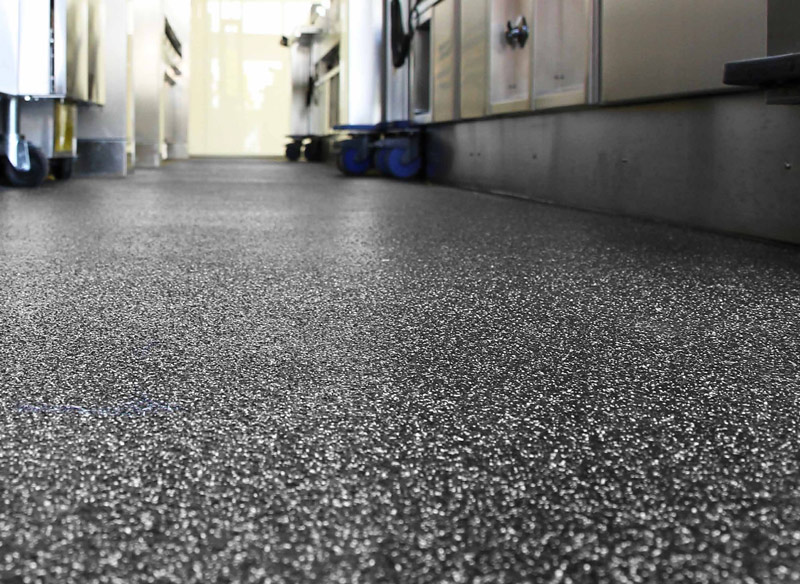
What to Consider for Each Area of Your Plant
Every zone of a food or beverage facility puts different demands on the floor. Before choosing a system, look at:
- Chemicals and heat: organic acids, fats, strong cleaning chemicals and hot water washdowns.
- Traffic and impact: forklifts, pallet jacks and dropped equipment.
- Lifecycle value: cheap coatings that fail early cost more over the life of the floor than a system built for the job.
For area-specific advice, see our pages on brewery floors, winery floors, distillery floors and coolroom flooring.
Three Floor Systems for Food and Beverage Facilities
| System | Best for | Watch out for |
|---|---|---|
| Polyurethane cement | Wet processing, cooklines, washdown bays | Higher upfront cost |
| Industrial epoxy | Dry storage, packaging, bottling lines | Not suited to constant heat or hot washdowns |
| Polished concrete | Dry warehousing, distribution, front of house | Acids can etch it, so keep it out of active food areas |
Polyurethane cement is the heavy-duty choice for wet, hot and high-impact areas, because it expands and contracts with the concrete beneath it and handles hot washdowns without lifting. Industrial epoxy gives a seamless, easy-clean surface for drier areas. Polished concrete suits dry, high-traffic spaces where chemicals aren’t an issue.
For most food and beverage plants, the production floor calls for polyurethane cement, and that’s where DiamondCrete comes in.
Why DiamondCrete is the Smart Choice for Your Next Food and Beverage Flooring Project
Choosing the right flooring for your facility is like picking the perfect ingredient for a recipe – it can make all the difference to the final result. Enter DiamondCrete PU Cement from Diamond Grind, a high-performance polyurethane cement solution that is as durable as it is intelligent. When searching for the best flooring for food and beverage industry applications, DiamondCrete should be at the top of your list. Here is why.
Built to Last: Industrial Strength Performance
Imagine a floor that can effortlessly handle the hustle and bustle of a busy commercial kitchen, the immense weight of heavy machinery, and the constant foot traffic of a production facility. That is the reality of a DiamondCrete PU Cement installation. Its exceptional durability means fewer repairs and replacements, allowing you to focus on what you do best – running your business.
Chemical Resistant Flooring for High-Stakes Environments
From acidic juice spills to oily fats and harsh cleaning agents, food and beverage flooring faces constant chemical attacks. DiamondCrete is specifically engineered as a chemical resistant flooring solution, designed to withstand a wide range of corrosive substances. This ensures your floor maintains its structural integrity and finish, no matter what it encounters during a shift.
Thermal Shock Resistance: The Temperature Tamer
Whether it is the intense heat of a commercial oven or the sub-zero chill of a cold storage room, DiamondCrete handles extreme temperatures with ease. Its thermal shock resistance means it will not crack, buckle, or warp during rapid temperature changes (such as hot-water washdowns in a cool room), providing a stable and reliable surface for all your operations.
Hygiene Hero: Cleanliness Without Compromise
In most industries, cleanliness is non-negotiable. DiamondCrete’s seamless, non-porous surface makes it incredibly easy to sanitise, preventing the dangerous buildup of bacteria and contaminants in cracks or grout lines. Furthermore, its slip-resistant properties are vital for keeping your staff safe in wet processing conditions, making it the best flooring for food and beverage industry safety standards.
A Chef’s Tale:
Picture Chef Marco, known for his culinary genius and dramatic flair, rushing to prepare a VIP feast. In his haste, he slips on an old, worn-out kitchen floor, sending a tray of hors d’oeuvres flying. While the scene sounds like a comedy, the aftermath of a workplace injury is no laughing matter. By choosing DiamondCrete, you ensure your team can dash around the kitchen with confidence, knowing your slip-resistant flooring has their back.
Aesthetic Appeal and Customisation
Who says functional flooring cannot be beautiful? Polyurethane cement is available in various finishes and colours, allowing you to customise the look to match your brand’s aesthetic. You can view the specific DiamondCrete Colour Chart to find the perfect fit for your professional environment and be sure and talk to us as we are regularly adding new colors.
Sustainable Flooring Solutions
Modern businesses prioritise the environment, and sustainable flooring solutions are a key part of that commitment. DiamondCrete is manufactured with low-VOC materials, making it an environmentally friendly option that does not compromise on performance. Because of its incredibly long lifespan, it requires less frequent replacement, contributing to a greener, more sustainable operation.
Peace of Mind with Diamond Grind
We stand behind our workmanship and the systems we install, giving you one less thing to worry about in your busy facility.
Perfect for Any Food and Beverage Application
DiamondCrete is versatile enough to be utilised across various zones, including:
- Wet processing and washdown zones
- Commercial kitchens and bakeries
- Beverage production and bottling areas
- Foodstuff preparation and packaging
- Fisheries and seafood processing
- Dairy and milk production facilities
- Poultry and meat processing plants
DiamondCrete PU Cement from Diamond Grind is more than just a surface – it is a smart investment in the future of your facility. With its unmatched chemical resistance and hygienic properties, it is the definitive choice for your next project.
Food and Beverage Flooring FAQs

Is DiamondCrete PU Cement suitable for cool rooms and freezers?
Yes. DiamondCrete is specifically designed for thermal shock resistance. Unlike standard epoxy, which can become brittle and crack in extreme cold, this polyurethane cement remains stable in temperatures ranging from deep-freeze conditions to high-heat washdowns.
Yes. DiamondCrete is specifically designed for thermal shock resistance. Unlike standard epoxy, which can become brittle and crack in extreme cold, this polyurethane cement remains stable in temperatures ranging from deep-freeze conditions to high-heat washdowns.
How does chemical resistant flooring improve safety in food plants?
In the food and beverage industry, organic acids and sugars can eat away at standard concrete, creating pits and uneven surfaces where bacteria grow and workers can trip. Using a chemical resistant flooring like DiamondCrete prevents this erosion, keeping the floor flat, hygienic, and safe for staff.
In the food and beverage industry, organic acids and sugars can eat away at standard concrete, creating pits and uneven surfaces where bacteria grow and workers can trip. Using a chemical resistant flooring like DiamondCrete prevents this erosion, keeping the floor flat, hygienic, and safe for staff.
What makes DiamondCrete one of the most sustainable flooring solutions?
DiamondCrete is considered a sustainable choice due to its low-VOC (Volatile Organic Compound) emission levels during installation and its extreme longevity. By reducing the need for frequent floor replacements and using safer chemicals, it lowers the overall carbon footprint of your facility’s maintenance.
DiamondCrete is considered a sustainable choice due to its low-VOC (Volatile Organic Compound) emission levels during installation and its extreme longevity. By reducing the need for frequent floor replacements and using safer chemicals, it lowers the overall carbon footprint of your facility’s maintenance.
How does DiamondCrete perform in wet processing areas?
In wet processing zones, drainage and slip resistance are the top priorities. DiamondCrete PU Cement is the best flooring for food and beverage industry use because it can be expertly “coved” up the walls to create a seamless, waterproof basin. Its textured finish provides essential grip for workers even when the floor is covered in water or oils, significantly reducing the risk of workplace accidents while helping you meet health and safety requirements.
In wet processing zones, drainage and slip resistance are the top priorities. DiamondCrete PU Cement is the best flooring for food and beverage industry use because it can be expertly “coved” up the walls to create a seamless, waterproof basin. Its textured finish provides essential grip for workers even when the floor is covered in water or oils, significantly reducing the risk of workplace accidents while helping you meet health and safety requirements.
Why are tiles unsuitable for food and beverage plants?
Grout lines absorb grease and moisture, which makes them hard to keep hygienic, and heavy pallet jacks crack tile edges. A seamless resin floor avoids both problems.
Can a new floor be installed without long plant downtime?
Yes. We schedule work around planned shutdowns or weekends, and many of our systems take foot traffic within 12–24 hours.
✅ Let's Talk — DiamondGrind
100% free consultation — no commitment required.