
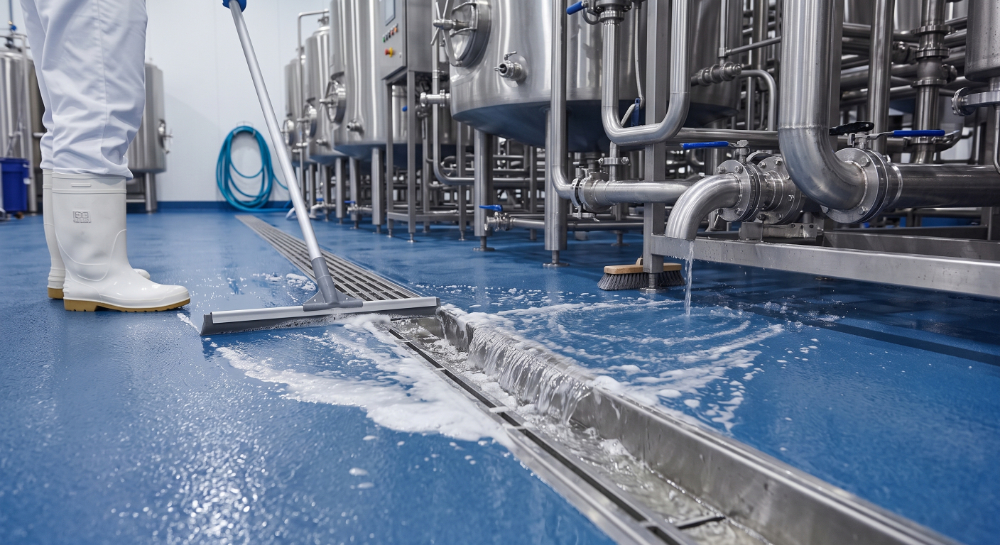
In food and beverage production, flooring is often an overlooked but critical aspect of facility design. For any asset manager, specifying certified **self draining floors** is a paramount investment in hygiene, long-term safety, and operational efficiency. Here, we will explore the critical importance of effective floor pitching and highlight the operational benefits of utilizing materials like polyurethane cement and epoxy flooring.
Understanding the Design Principles of Self Draining Floors
Self draining floors aren’t just a material type; they are a precise system engineered with a gentle slope or gradient that actively directs water, oil, and processing liquids towards the drain lines, preventing dangerous puddles and standing water. This design is foundational in aggressive environments where frequent washdowns or spills occur, such as commercial kitchens, processing plants, and breweries.
Key Benefits of Utilizing Self Draining Floors in Industry
1. Maximum Hygiene and Sanitation
Maintaining immaculate cleanliness is critical in food and beverage facilities to eliminate the risk of contamination and guarantee product safety. Standing water is a prime location for harmful bacterial growth, mould, and grease accumulation. Self draining floors assist your sanitation teams by removing liquids instantly, drastically reducing the time and resources required for effective cleaning. This active drainage prevents bacteria from colonising on porous grout lines, cracks, or pits. Read about HACCP and hygienic floor standards.
2. Enhanced Workplace Safety
Slip, trip, and fall injuries are a major operational risk. Wet, greasy, and oily floors are the leading cause of accidents in the industrial sector. Self draining floors minimise this risk by ensuring that liquids are rapidly drained away, keeping the walking surfaces dry, slip-resistant, and safe for your employees, forklifts, and equipment. Explore the safety benefits of compliant flooring.
3. Higher Production Efficiency
Time is a vital metric in any production environment. Floors that hold puddles or have insufficient falls require excessive cleaning effort from your staff, often taking them away from more critical operational tasks. Seamless self draining floors can be cleaned much faster, leading to increased productivity and significantly lower operational cleaning costs. Discover efficient, rapid-cure flooring solutions.
Optimised Flooring Materials for Industrial Drainage
Polyurethane Cement
This is a premier choice for high-abuse environments due to its extreme durability and thermal shock resistance. Polyurethane cement withstands aggressive cleaning agents, hot water washdowns, and intense processing temperatures, making it ideal for facilities demanding strict sanitation rules without compromising on physical strength. Learn more about polyurethane cement screeds.
Epoxy Flooring
High-performance epoxy flooring provides a durable, seamless, and non-porous surface that is easy to maintain. These systems resist chemical stains and are available in various colours and finishes to aid visibility, safety zoning, and aesthetics. They represent a highly efficient and cost-effective solution for many commercial environments.
Regulatory Compliance in Australia
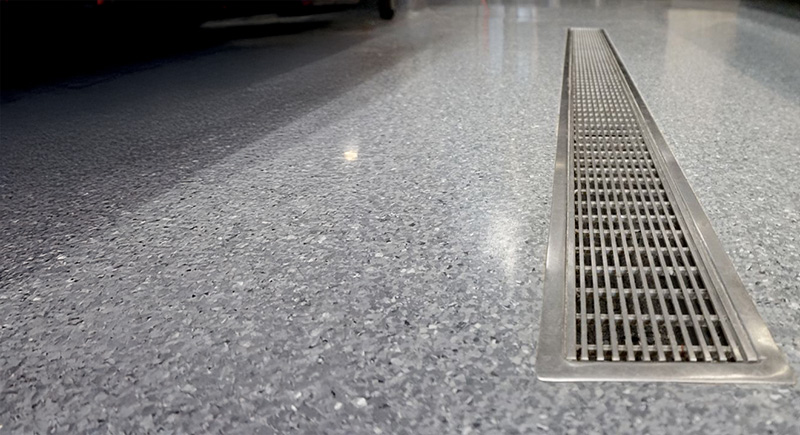
Food and beverage facilities across Australia must adhere to strict health, safety, and operational regulations. Implementing self draining floors that utilise integrated coving and approved drain systems is often the only way to satisfy audit criteria. These regulations mandate precise, monolithic surfaces to prevent contamination and accidents, ensuring compliance during snap audits. Read about regulatory compliance for flooring.
Industrial Case Studies
Many Australian facilities have successfully upgraded to self draining floors with immediate returns on investment. For instance, after installing pitched polyurethane cement floors, a large dairy processing plant reported significantly reduced nightly washdown times and improved audit scores. Similarly, a boutique brewery noted far fewer slip-and-fall incidents and enhanced employee satisfaction with their new anti-slip epoxy flooring.
Conclusion: Invest in Your Slab’s Performance
Self draining floors are not an optional feature for modern food and beverage facilities; they are an essential component of hygiene, safety, and long-term production. By choosing a system and a professional installer that can guarantee precise falls and seamless topcoats, you secure your facility’s compliance and productivity. Don’t let standing water threaten your operations. Contact Diamond Grind today to schedule a detailed floor assessment and get assistance with your drainage strategy.
FAQ,s

How do you calculate the correct falls or gradient for self draining floors?
According to Australian building and sanitation standards, industrial self draining floors generally require a minimum gradient of 1:100 (10mm of fall per metre) for standard wet areas, and up to 1:50 (20mm of fall per metre) for high-volume liquid processing zones. Achieving this precise pitch requires skilled substrate preparation using specialized polymer screeds before the final polyurethane or epoxy topcoat is applied.
Can self draining floors be installed over existing uneven concrete slabs?
Yes, absolutely. Most commercial retrofits involve old concrete slabs that suffer from low spots, structural settling, or incorrect pitching. Our team remedies this by grinding down high points and applying a rapid-curing polymer or polyurethane cement underlayment. This allows us to manually re-engineer the necessary falls towards your drainage channels before sealing the area with a seamless hygienic finish.
Why is polyurethane cement preferred over epoxy for pitched drainage systems?
While both materials provide seamless surfaces, polyurethane cement screeds are much thicker (typically 6mm to 9mm) and far more workable on a vertical slope. This thickness makes it significantly easier for installers to hand-trowel precise, consistent gradients. Additionally, polyurethane cement possesses superior thermal shock resistance, meaning the pitched floor won’t crack or lose its bond when hit with hot water during heavy washdowns.
Do self draining floors eliminate the need for manual squeegeeing?
While self draining floors dramatically reduce standing water and prevent large puddles from forming, they are designed to assist your cleaning crew, not replace them. In heavy production facilities, staff will still use squeegees to move thick chemical foams or heavy ingredient spills into the drains. However, because the floor features a built-in fall, the manual clearing process is exponentially faster, lighter, and more efficient.
✅ Let's Talk — DiamondGrind
100% free consultation — no commitment required.