
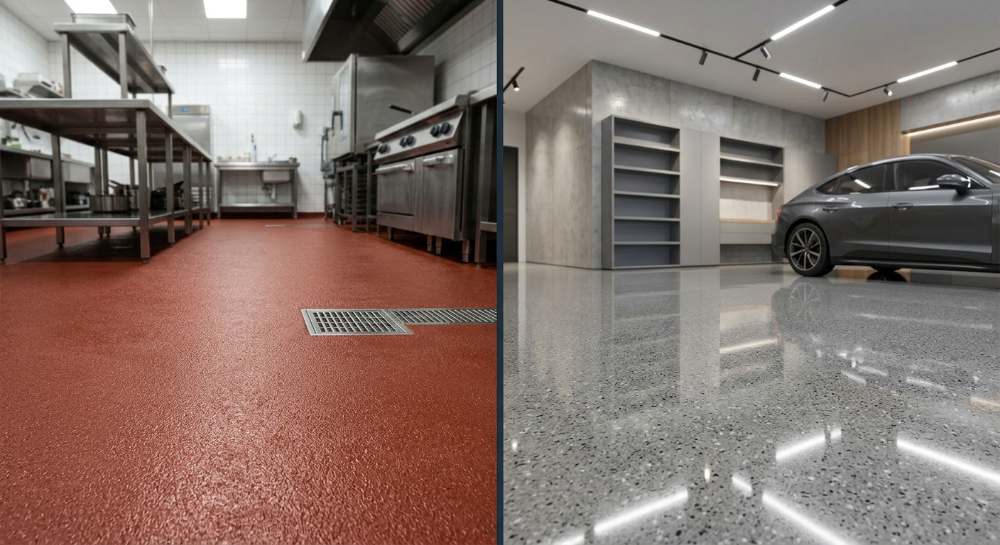
When protecting and enhancing concrete surfaces, choosing the right material depends heavily on your environment, traffic volume, and exposure to liquids or chemicals. Polyurethane-based products are industry standards for surface protection, but their formulations vary significantly. The debate between polyurethane cement vs polyurethane sealers comes down to thin-film surface protection versus heavy-duty structural flooring.
While both rely on polyurethane resin technology, they solve vastly different concrete challenges. Note that this comparison focuses purely on polyurethane options; if you are considering resin coatings more broadly, explore our guide on epoxy flooring for additional context.
7 Reasons Polyurethane Cement and Sealers Aren’t the Same
To help you choose the best system for your facility, here is how polyurethane cement and polyurethane sealers compare across 7 critical performance metrics:
1. System Thickness & Build
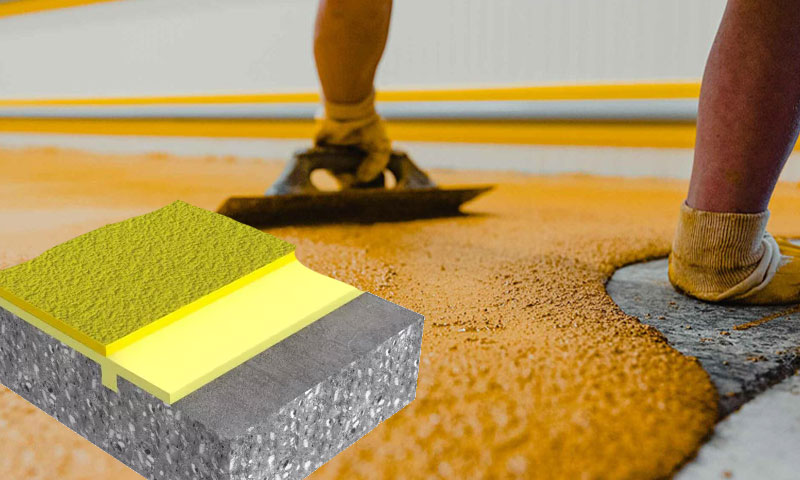
Polyurethane sealers are thin-film liquid coatings applied at less than 0.5 mm thickness. By contrast, polyurethane cement is a thick, heavy-duty screed or mortar system typically applied between 3 mm and 9 mm+ in depth.
2. Primary Purpose & Application
Sealers are designed as topical surface treatments to dustproof, seal, and enhance concrete. Polyurethane cement serves as a full structural resurfacing system engineered for demanding industrial environments.
3. Impact & Mechanical Load Capacity
Polyurethane sealers withstand light-to-moderate foot traffic and light wheeled equipment. Polyurethane cement offers extreme impact resistance, handling heavy forklift traffic, pallet jack drag, and dropped machinery without gouging.
4. Thermal Shock Resistance
Topical sealers perform well under normal ambient conditions but can fail under intense heat or rapid temperature shifts. Polyurethane cement matches the thermal expansion of concrete, handling temperature swings from sub-zero freezers (-40°C) up to steam cleaning at +120°C without cracking or delaminating.
5. Chemical & Acid Defense
While sealers block water, oils, and mild household stains, polyurethane cement provides maximum protection against concentrated organic acids, alkalis, solvents, and aggressive sanitisers.
6. Hygiene & Sanitary Compliance
Polyurethane cement cures as a dense, seamless, non-porous floor build without joint voids, preventing bacterial and fungal growth to meet strict Australian food safety regulations. Sealers provide good surface cleanability but depend entirely on the smoothness of the underlying concrete slab.
7. Ideal Operating Environments
Polyurethane sealers suit residential garages, retail spaces, patios, and light commercial areas. Polyurethane cement is the gold standard for food processing facilities, commercial kitchens, chemical plants, and heavy manufacturing hubs.
Detailed Product Breakdowns
Understanding Polyurethane Sealers
Polyurethane sealers are topical protective coatings designed to shield concrete and other porous substrates from surface wear, moisture penetration, and chemical spills. Formulated in solvent-based or water-based options, aliphatic sealers also provide superior UV stability to prevent yellowing in direct sunlight.
Understanding Polyurethane Cement
Polyurethane cement (also known as polyurethane mortar or screed) combines polyurethane resin with Portland cement, graded aggregates, and water. This forms an exceptionally durable, thermal-shock-resistant matrix designed for rapid curing (often returning to full service within 12 to 24 hours).
Polyurethane Cement vs Polyurethane Sealers: Quick Comparison
| Feature | Polyurethane Sealers | Polyurethane Cement |
|---|---|---|
| 1. System Thickness | Thin film (<0.5 mm) | Thick screed (3 mm to 9 mm+) |
| 2. Primary Purpose | Topical sealing & dustproofing | Heavy-duty structural concrete resurfacing |
| 3. Impact Resistance | Moderate (light traffic) | Extreme (heavy machinery, dropped loads) |
| 4. Thermal Resistance | Standard ambient temperatures | Extreme thermal shock (-40°C to +120°C) |
| 5. Chemical Defense | Mild chemicals, oils, and water | Concentrated acids, alkalis, and solvents |
| 6. Hygiene Rating | Standard cleanable finish | Seamless, anti-microbial industrial barrier |
| 7. Best Environments | Garages, retail, walkways | Food processing, commercial kitchens, chemical plants |
Which Flooring System Suits Your Facility?
Choosing between polyurethane cement vs polyurethane sealers comes down to your space’s specific operational demands:
- Opt for a polyurethane sealer if you need an economical, UV-stable solution for residential, commercial, or light industrial concrete.
- Opt for polyurethane cement if your floor experiences high heat, steam washdowns, forklift movement, harsh chemicals, or rigorous health audits.
At Diamond Grind, we engineer concrete flooring solutions tailored to your traffic requirements, compliance standards, and budget. Contact Diamond Grind today to consult with our technical specialists on specifying the right system for your slab.
FAQ,s

What is the main difference between polyurethane cement and a polyurethane sealer?
A polyurethane sealer is a thin-film protective coating applied over concrete to resist dust, moisture, and mild stains. Polyurethane cement is a thick, heavy-duty screed that bonds chemically with concrete to withstand extreme thermal shock, harsh chemicals, and heavy industrial machinery impact.
Can polyurethane cement withstand steam cleaning and high heat?
Yes. Polyurethane cement is specifically engineered to withstand thermal shock and continuous temperature extremes ranging from sub-zero freezers up to steam cleaning at over 120°C without cracking, blistering, or delaminating from the concrete base.
Are polyurethane sealers suitable for outdoor concrete floors?
Yes, provided an aliphatic polyurethane sealer is used. Aliphatic formulations are highly UV-stable, meaning they will not yellow, chalk, or break down when exposed to direct sunlight on outdoor paths, driveways, or commercial plazas.
How long does polyurethane cement take to cure before heavy use?
Polyurethane cement systems are formulated for rapid turnaround times. Most formulations accept foot traffic within 6 to 8 hours and full industrial vehicle traffic or chemical exposure within 12 to 24 hours of application.
✅ Let's Talk — DiamondGrind
100% free consultation — no commitment required.