
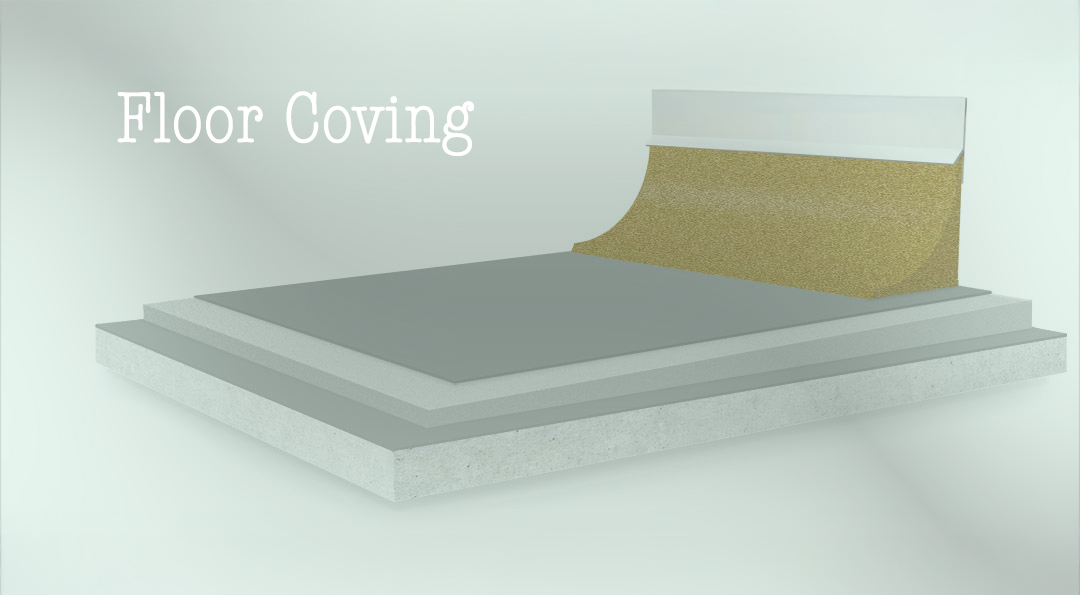
When it comes to industrial and commercial flooring, a single overlooked detail can mean the difference between passing a strict hygiene audit and facing an expensive shutdown. While most facility managers focus entirely on the floor coating itself, the real vulnerability lies at the walls. High-performance floor coving is the critical line of defence against hidden bacteria, structural rot, and moisture seepage.
At Diamond Grind, we design seamless coving systems that don’t just finish a room—they actively protect your investment, slash your maintenance hours, and guarantee your facility meets strict Australian compliance standards.
What is Floor Coving?
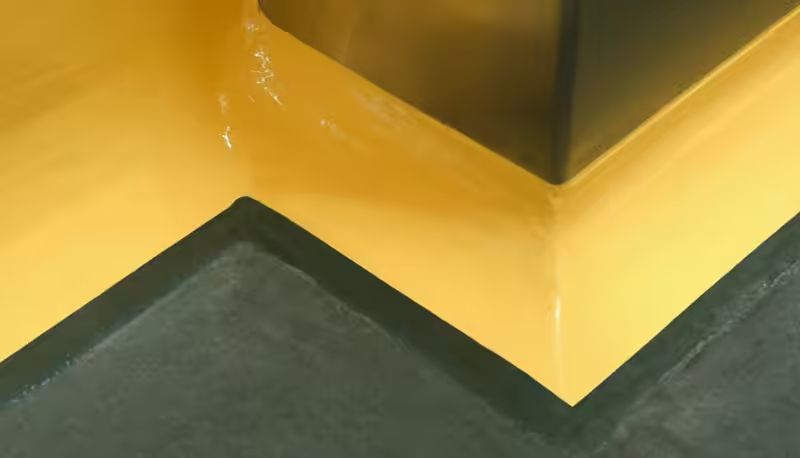
Floor coving involves installing a specialised, curved barrier right where the floor meets the wall, creating a smooth and completely seamless transition. This professional technique eliminates the sharp 90-degree angle, which is notoriously a major hotspot for dirt, grime, and moisture accumulation.
Depending on the specific demands of your environment, floor coving can be constructed from heavy-duty polymer resins, polyurethane, vinyl, or metal. Beyond sanitation, floor coving provides excellent protection for concrete joints, effectively preventing structural cracks and impact damage that can easily occur from heavy machinery vibrations, traffic, and structural wall movement.
6 Important Benefits of Floor Coving
Implementing a seamless wall-to-floor curve offers critical advantages for facility managers. Here are the six primary reasons why commercial spaces invest in professional floor coving:
1. Enhanced Hygiene & Bacteria Prevention
In strict environments such as commercial kitchens, pharmaceutical factories, and food processing plants, maintaining pristine hygiene standards is non-negotiable. Floor coving prevents dirt, organic waste, and dangerous bacteria from nesting in tight corners, making sanitisation cycles more efficient and fully compliant with FSANZ (Food Standards Australia New Zealand) and HACCP food safety audits.
2. Superior Moisture & Liquid Protection
Industrial floor coving acts as an impermeable barrier against water, chemical washdowns, and harsh liquids, preventing corrosive seepage into the underlying walls and subfloors. This is particularly vital in wet processing environments where unsealed joints can cause severe structural damage and mould growth over time.
3. Sleek Aesthetic Appeal
A well-installed cove base provides a polished, modern, and professional finish to any facility. It wraps the perimeter of the room in a smooth, continuous line that beautifully unifies the floor and wall design while completely hiding uneven architectural joints.
4. Long-Term Commercial Durability
By reinforcing and shielding the highly vulnerable edges of your floor, coving prevents severe impact damage such as chipping, cracking, and peeling caused by passing forklifts, pallets, or cleaning equipment. This extends the working lifespan of your entire floor system, making it a highly cost-effective asset investment.
5. Workplace Safety
Seamless floor coving simplifies compliance with Australian work health and safety (WHS) standards. Eliminating sharp corners minimises structural degradation where hidden debris can accumulate, creating a fundamentally safer and cleaner environment for your high-traffic workforce.
6. Ease of Maintenance
With a continuous floor coving profile, daily cleaning routines become incredibly straightforward. Mops, squeegees, and industrial floor scrubbers can glide smoothly up the curve without getting stuck in hard-to-reach crevices, reducing maintenance labour hours and chemical costs.
Our Step-by-Step Floor Coving Installation Guide
At Diamond Grind, we specialise in precision floor coving installations as part of our comprehensive resinous flooring solutions. Achieving a flawless, seamless finish requires a meticulous multi-step process:
1. Surface Preparation
The foundation of any long-lasting cove is prep work. The wall-to-floor junction must be mechanically ground and thoroughly cleaned to remove all old adhesive, grease, dust, or laitance, ensuring maximum chemical adhesion of the cove matrix material.
2. Accurate Measurement and Cutting
Precise measurements are taken across the room’s perimeter to cut the foundational cove base material to exact lengths. This careful step ensures an airtight, snug fit against the wall substrates before any liquids are applied.
3. Application of Industrial Adhesive
A high-strength adhesive anchor or specialised priming resin is applied directly onto the back of the cove base and the structural junction, creating an unbreakable bond that withstands thermal shock and heavy structural movement.
4. Precision Installation of the Cove Base
The coving material is meticulously formed, positioned, and troweled into place along the room perimeter. Our installers pay close attention to complex vertical transitions to ensure a perfectly straight, uniform line across the entire facility profile.
5. Seamless Sealing and Finishing
To lock in total protection, a seamless resinous coating—such as our durable polyurethane cement or heavy-duty epoxy—is applied directly over the cove base. This fuses the wall curve and the floor together into one continuous, high-performance shell.
6. Rigorous Inspection and Quality Control
The final step involves a thorough visual and physical inspection to verify that the profile is perfectly smooth, non-porous, and completely waterproof. Any micro-adjustments are handled immediately to guarantee a completely flawless finish.
Why Choose Diamond Grind for Commercial Floor Coving?
With years of hands-on experience across the commercial sector, Diamond Grind is your trusted partner for high-performance flooring solutions. Our specialist teams utilise top-tier raw materials and advanced mechanical techniques to deliver highly durable, hygienic, and visually stunning spaces. Whether your facility demands chemical-resistant polyurethane concrete, industrial epoxy flooring, or architectural polished concrete, we have you completely covered.
Contact the team at Diamond Grind today for an expert consultation and discover how professional floor coving can optimise your industrial or commercial workspace.
Floor Coving FAQ,s

What is the standard height for commercial floor coving?
The standard height for commercial floor coving is typically 100mm (approximately 4 inches). However, depending on specific industry compliance guidelines—such as strict food processing or pharmaceutical manufacturing regulations—coving heights can range anywhere from 50mm up to 150mm to ensure adequate splash and washdown protection against the walls.
The standard height for commercial floor coving is typically 100mm (approximately 4 inches). However, depending on specific industry compliance guidelines—such as strict food processing or pharmaceutical manufacturing regulations—coving heights can range anywhere from 50mm up to 150mm to ensure adequate splash and washdown protection against the walls.
Can floor coving be applied over existing wall substrates?
Yes, professional floor coving can be applied over most stable wall substrates, including plasterboard, concrete blocks, villa board, and sandwich cool room panels. The critical requirement is that the base substrate must be structurally sound, dry, and completely free of loose paint or grease so the resinous coving materials can achieve a permanent, chemical bond.
Yes, professional floor coving can be applied over most stable wall substrates, including plasterboard, concrete blocks, villa board, and sandwich cool room panels. The critical requirement is that the base substrate must be structurally sound, dry, and completely free of loose paint or grease so the resinous coving materials can achieve a permanent, chemical bond.
What is the difference between a pencil cove and a cantilever cove?
A pencil cove is a small, subtle radius curve applied directly at the floor-to-wall joint, ideal for areas requiring light washdowns. A cantilever cove (or classic radius cove) extends further up the wall and wraps seamlessly into the floor coating system. Cantilever coving is the industry standard for commercial kitchens and heavy industrial zones because it completely eliminates tight angles where moisture can pool.
A pencil cove is a small, subtle radius curve applied directly at the floor-to-wall joint, ideal for areas requiring light washdowns. A cantilever cove (or classic radius cove) extends further up the wall and wraps seamlessly into the floor coating system. Cantilever coving is the industry standard for commercial kitchens and heavy industrial zones because it completely eliminates tight angles where moisture can pool.
How long does it take to install resinous floor coving?
The installation of resinous floor coving typically adds 1 to 2 days to a standard commercial flooring project. Because coving requires meticulous hand-troweling, precision corner shaping, and dedicated curing times for the priming, body, and top-sealing layers, it is systematically installed alongside the main polyurethane or epoxy floor coating application.
✅ Let's Talk — DiamondGrind
100% free consultation — no commitment required.