
Epoxy coats and paints are often lumped together, but true epoxy coatings and epoxy floor paints are very different products. Both have “epoxy” in the name, yet they differ in what’s in the tin, how they’re applied, how long they last and what they cost over time. Choosing the wrong one is a common reason concrete floors need recoating far sooner than expected.
If you’re planning to upgrade a concrete floor at home or in a commercial space, understanding the differences between epoxy coats and paints will help you pick the right finish the first time. Below, the Diamond Grind team breaks down the five key differences and when each option makes sense.
| Professional epoxy coating | Epoxy paint | |
|---|---|---|
| What it is | Two-part resin and hardener that chemically cures | Mostly acrylic or latex paint with some epoxy added |
| Thickness | Thick, high-build | Thin film |
| Preparation | Diamond grinding and moisture testing | Often just a clean |
| Hot-tyre pick-up | Resists it | Prone to peeling under hot tyres |
| Lifespan | Many years with the right preparation | Often needs recoating within a year or two |
| Best for | Garages, retail, commercial and industrial | Very low-traffic areas on a tight budget |
5 Key Differences Between Epoxy Coats and Paints
1. Composition: What’s Actually in the Tin
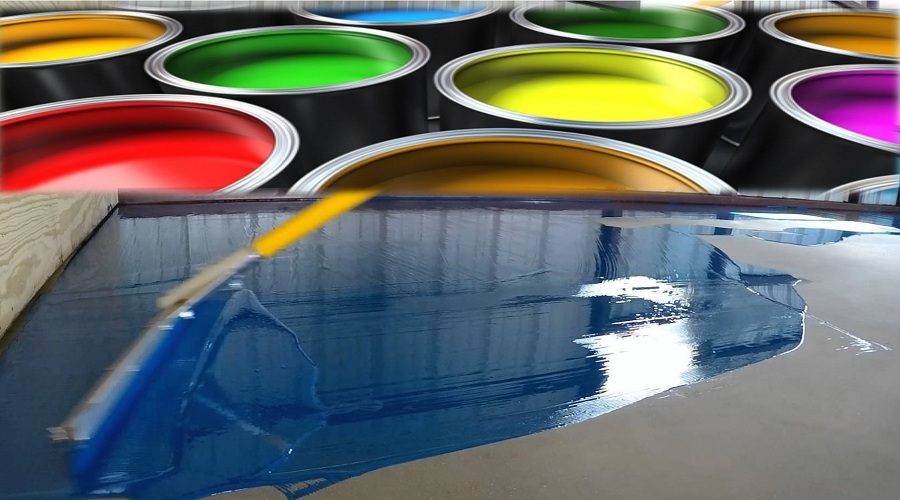
The biggest difference between epoxy coats and paints starts with the product itself. Epoxy floor paint is usually a single-pack, water-based or acrylic paint with a small amount of epoxy added for extra toughness. Some two-pack versions exist, but they still go on as a thin, paint-like film.
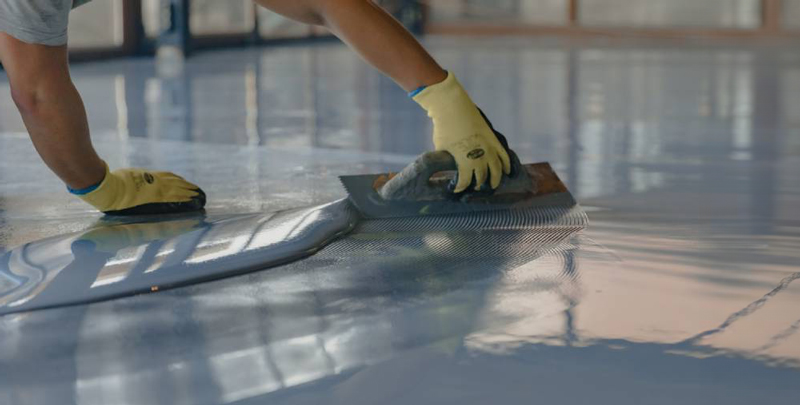
A true epoxy coating is a two-part system made up of epoxy resin and a hardener, often a polyamine. Once mixed, the two react chemically and cure into a hard, rigid layer that bonds to the concrete. Coatings can be applied as roller coats or built up into thicker self-levelling systems, depending on the job.
2. Preparation and Installation
Both need a clean surface, which is one of the few things epoxy coats and paints have in common. Beyond that, installation is very different.
Epoxy paint is applied straight from the tin with a brush or roller, which makes it a popular DIY option. Epoxy coats need more care. The resin and hardener must be mixed in exact ratios and applied within a limited working time. The slab must also be moisture tested and dry, because moisture rising through the concrete is a common cause of bubbling and peeling.
Diamond grinding is also essential. It removes the weak surface layer and opens the pores of the concrete so the coating can penetrate and bond properly. This is why we recommend professional installation for epoxy coatings.
3. Thickness, Durability and Lifespan
Epoxy paint goes on as a thin film. It’s tougher than ordinary paint, but in busy areas it can wear through within a few years under vehicle tyres, forklifts, dragged equipment and heavy foot traffic.
Epoxy coatings are applied much thicker and cure much harder. Installed on well-prepared concrete, they commonly last a decade or more in commercial settings, depending on traffic and maintenance. When you compare epoxy coats and paints side by side, durability is where the gap is widest.
4. Price and Long-Term Value
Epoxy paint is cheaper upfront. You can buy it off the shelf and apply it yourself, saving on labour. The catch is how long it lasts. Because it wears with daily use, you may need to recoat regularly, and the cost of repeated materials, labour and downtime soon adds up.
Epoxy coats like Epimax cost more and need professional installation, but they’re a solid long-term investment. Over the life of the floor, the cost gap between epoxy coats and paints often narrows or reverses, especially in high-traffic areas.
5. Cleaning and Chemical Resistance
Epoxy floor paint is stronger than standard paint, but it has limited resistance to stains, chemicals and abrasion. Harsh cleaning products and stiff brushes can dull or damage the surface, so choose your cleaners and mops carefully. With gentle, regular maintenance, it should hold up in low-use areas without peeling.
Once cured, epoxy coatings are hard and highly resistant to grease, oil, chemical spills and heavy traffic. They’re easy to clean with standard commercial methods. That’s why they’re widely used in commercial premises such as warehouses and workshops, and in healthcare facilities.
Hot-Tyre Pick-Up: Why Thin Paints Fail in Garages
Hot car tyres can soften and lift a thin epoxy paint straight off a garage floor, one of the most common reasons DIY garage floors fail. A properly prepared, high-build epoxy coating resists it. See garage epoxy floors.
Epoxy Coats and Paints: Which Should You Use?
When Epoxy Paint Makes Sense
If you’re working to a tight budget and need a flooring solution for low-traffic areas with little wear, a high-quality epoxy paint can do the job. A storeroom, laundry or lightly used home garage are good examples. Just expect to recoat it over time.
When to Choose an Epoxy Coating
For commercial properties, warehouses, workshops, busy garages, or any home where you want a long-lasting, high-quality finish, epoxy coats are the better choice. They come in a range of colours, flake blends and finishes, including non-slip options, so they suit both practical and design-focused spaces.
Before deciding between epoxy coats and paints, think about how the floor will be used, the condition of the concrete, your budget and how long you need the finish to last.
Where to Start
Whichever option you lean towards, the result depends on how well the concrete is prepared and how carefully the product is applied. Diamond Grind has been installing epoxy flooring for homes and commercial properties across Sydney and surrounding NSW areas for years, and we’re happy to help you work out the right system.
We’ll inspect your floor, explain your options honestly and provide an accurate cost estimate, even if you’re still weighing up epoxy coats and paints. From floor preparation to professional epoxy floor installation, we handle the entire process. Call or email us to get started. For homes, see our residential flooring in Sydney page.
Epoxy Resins We Use
Diamond Grind uses epoxy resins from leading Australian and international manufacturers, including:
Epoxy Coats vs Paint FAQs
Q1: Is epoxy paint the same as an epoxy coating?
A: No. Epoxy paint is usually a water-based or acrylic paint with some epoxy added, applied as a thin film. An epoxy coating is a two-part resin and hardener system that cures into a much thicker, harder surface. Although the names sound similar, epoxy coats and paints differ in strength, lifespan and how they’re installed.
Q2: How long do epoxy coats and paints last?
A: Epoxy paint may only last a few years in busy areas before it wears through and needs recoating. A professionally installed epoxy coating commonly lasts a decade or more in commercial settings. Actual lifespan for both epoxy coats and paints depends on surface preparation, traffic and maintenance.
Q3: Can I apply an epoxy floor coating myself?
A: Epoxy paint is designed for DIY use, but a true epoxy coating is best left to professionals. It needs moisture testing, diamond grinding, precise mixing and fast application within a limited working time. Mistakes can lead to bubbling, peeling or an uneven finish.
Q4: Which is cheaper, epoxy coats or epoxy paints?
A: Epoxy paint is cheaper to buy and apply upfront. However, because it wears faster and needs regular recoating, an epoxy coating often works out better value over the life of the floor. When comparing epoxy coats and paints on cost, factor in how much traffic the floor gets and how long you need it to last.
Q5: What is hot-tyre pick-up, and does it affect epoxy floors?
A: It’s when hot car tyres soften and lift a thin floor coating. Thin epoxy paints are prone to it, while a properly prepared, high-build epoxy coating resists it.
✅ Let's Talk — DiamondGrind
100% free consultation — no commitment required.