
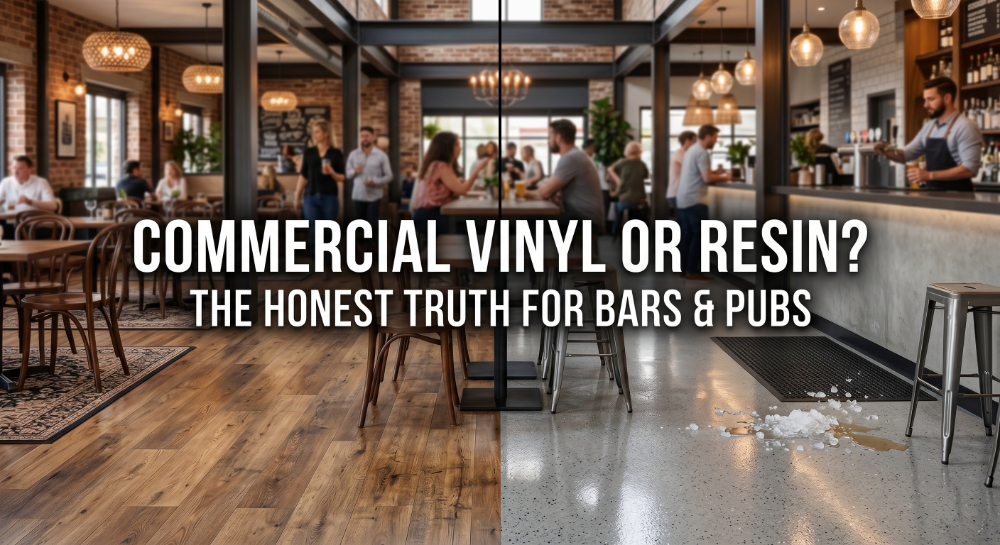
When you are designing or renovating a busy venue, choosing between **vinyl or resin flooring** is one of the most critical decisions you will make for your budget. In the fast-paced hospitality industry, your floor isn’t just a design feature—it is a hardworking asset. Opting for the right surface keeps your maintenance costs low and saves you from the massive headache of closing your doors for early flooring replacements due to premature wear and tear. At Diamond Grind, we help venue owners pick the perfect, heavy-duty foundation to handle everything a Friday night crowd can throw at it.
Choosing Vinyl or Resin Flooring for Australian Hospitality Venues
Managers of bars, restaurants, and pubs put a massive amount of effort into creating a flawless atmosphere that keeps patrons coming back. From the front-of-house lounge to the main service bar, every design choice needs to be smart. Your floor has to withstand constant challenges: spilled craft beers, dragged furniture, heavy foot traffic (including sharp high heels), and rigorous nightly cleanups using intense commercial chemicals. Because of this, your floor demands extreme durability, excellent slip resistance, and a long lifespan.
While both materials are popular across Sydney and regional NSW, they perform very differently under pressure. Let’s look at how they stack up across the key areas that matter to your business:
1. Which Floor Lasts Longer Under Heavy Foot Traffic?
Let’s start with the top concern for most venue owners: longevity. Commercial sheet vinyl flooring in a high-traffic bar typically needs to be ripped out and replaced within three to five years as the seams begin to lift and trap dirt. Heavy-duty epoxy resin flooring, on the other hand, is chemically bonded to the concrete slab and can easily last many years longer without budgeting for a full replacement.
While both options come in a vast range of colours and patterns to suit your venue’s vibe, resin holds up far better against harsh commercial cleaning agents. Over time, strong sanitising chemicals can bleach or degrade the surface of commercial vinyl, causing it to lose its colour. Epoxy resin floors stay completely untouched, keeping their vibrant finish no matter how hard you scrub them.
To get the full value out of your investment, we always recommend choosing top-tier commercial brands over cheap alternatives. If you choose a resin layout, we use premium, industry-trusted Australian brands like Hychem, EpiMax, or Flowcrete coupled with professional installation.
2. Daily Cleaning and Long-Term Maintenance
While epoxy resin is undoubtedly the tougher, seamless option, it is a myth that it requires zero upkeep. Over many years of intense physical impacts, tiny hairline cracks can occasionally form in the resin. If this happens, fixing it involves a quick professional sand-back and a fresh topcoat application to make it look brand new again.
Vinyl can look great for a reasonable period if your staff are incredibly disciplined with their daily mopping routines. However, vinyl wears down much faster in localized hot spots—like right in front of the main beer taps or the kitchen pass. When vinyl gets gouged, torn, or burnt by a dropped cigarette, patching it neatly is almost impossible. The damaged sheet usually has to be cut out entirely and replaced by a professional to avoid a dangerous trip hazard.
3. Installation Time and Surface Prep
To get a flawless finish that lasts for years, epoxy resin flooring must be installed over a perfectly prepped base. This means our team will mechanically grind your existing concrete to ensure a clean, level, and porous surface before the liquid resin is applied. While this requires a bit more upfront preparation, it ensures a permanent bond.
Installing commercial vinyl is generally a faster process and doesn’t require the same depth of concrete grinding. However, it still requires an expert touch. If the vinyl sheets aren’t cut perfectly, or if low-grade glues are used around wet bar areas, moisture will seep under the seams, causing the vinyl to bubble, smell, and lift away from the floor.
Get Expert Help Specifying Your Venue’s Floor
Still stuck trying to decide which style fits your budget and design theme? Don’t leave it to guesswork. At Diamond Grind, we specialise in premium commercial flooring systems tailored to the unique demands of the hospitality sector.
Whether your venue is better suited to heavy-duty slip-resistant epoxy behind the bar, a stunning polished look in the dining room, or a hard-wearing vinyl layout, we have the machinery and experience to install it seamlessly. Contact the friendly specialists at Diamond Grind today for practical advice and a clear, transparent quote for your venue.
FAQ,s

Is vinyl or resin flooring safer for wet bar areas where drinks are constantly spilled?
Seamless resin flooring is generally the safer and more compliant choice behind active bars and beverage stations. While vinyl can be slippery when wet, epoxy resin allows us to blend specialized anti-slip aggregates directly into the liquid topcoat. This creates a custom, high-grip texture that protects your bar staff from slips and falls, even when the floor is covered in spilled beer, ice, or washdown water.
Can resin flooring handle hot commercial dishwasher discharges better than vinyl?
Yes, absolutely. Commercial kitchens and back-bar glass washing areas experience rapid temperature spikes from hot water discharges. Standard vinyl flooring relies on heat-sensitive adhesives that will break down, melt, and peel over time when exposed to hot water. Heavy-duty polyurethane resin screeds are highly resistant to thermal shock, handling boiling water and steam cleaning without blistering or losing their bond.
How do you clean grout-free resin flooring compared to commercial vinyl sheets?
Because epoxy resin is poured as a single, continuous liquid, it cures into a completely seamless surface with no grout lines or joins. This makes nightly pack-down incredibly fast, as dirt and bacteria have nowhere to hide; you can simply squeegee the wash water straight to the floor wastes. Commercial vinyl requires welded seams which can trap dark grime over time if not scrubbed rigorously with specialised floor machines.
Can a resin floor match the premium, high-end look of a boutique wine bar?
Definitely. While many people associate resin with industrial warehouses, modern commercial epoxy can be engineered into stunning architectural finishes. From striking solid colors to decorative metallic swirls, we can tailor the visual style to fit a sophisticated cocktail lounge or boutique pub. Conversely, if you prefer an industrial aesthetic, we can grind and seal your slab to deliver a gorgeous marbled, polished concrete look.
✅ Let's Talk — DiamondGrind
100% free consultation — no commitment required.