
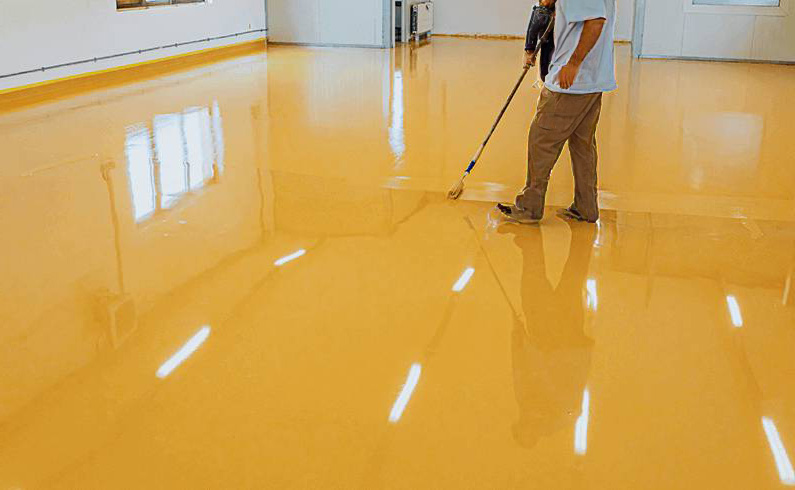
Choosing the Right Option for Commercial Concrete Coatings:
Are you managing a facility with dull, dusty, or rapidly degrading flooring? Whether you need to secure a high-traffic industrial warehouse, protect an automotive service bay, or upgrade a busy retail environment, choosing the correct system for commercial concrete coatings is a critical infrastructure decision. In demanding commercial settings, your floor is the literal foundation of your daily operations. Investing in the wrong finish can lead to structural cracks, safety violations, and catastrophic operational downtime. Fortunately, Diamond Grind has you covered.
In this comprehensive asset manager’s guide, we will delve into the leading industrial floor systems, exploring the features, benefits, and technical considerations of each. From high-build epoxies to thermal-shock-resistant polyurethane cement, we will evaluate vital factors like compressive strength, chemical resistance, installation speed, and lifetime maintenance overheads. Read on to find the ultimate operational match for your business premises.
The Operational Importance of Heavy-Duty Concrete Protection
Bare concrete slabs are highly porous structures that act like a dense sponge, absorbing oils, moisture, and corrosive industrial chemicals. Over time, this sub-surface contamination triggers internal structural degradation, surface spalling, and constant concrete dusting that can jeopardize inventory and contaminate air filtration systems.
Specifying high-performance commercial concrete coatings creates an impenetrable, monolithic barrier over your structural slab. This engineered shield prevents chemical erosion, withstands severe impact from heavy machinery, eliminates concrete dust at the source, and ensures your facility remains fully compliant with Australian workplace safety and hygiene standards.
Five Elite Systems for Commercial Concrete Coatings
1. Polyurethane Cement: The Heavy-Industrial Powerhouse
When it comes to selecting ultra-heavy-duty commercial concrete coatings for food processing plants, commercial kitchens, or chemical manufacturing zones, polyurethane cement is the gold standard. Produced by blending cement, aggregate, water, polyurethane resin, and a hardener, this system handles intense physical abuse and aggressive chemical exposure effortlessly.
Its seamless, non-porous structure repels bacterial growth and permits high-pressure sanitisation. Crucially, polyurethane cement shares a near-identical thermal expansion rate with the underlying concrete, meaning it possesses magnificent thermal shock resistance and will not delaminate or blister when subjected to boiling water washdowns or sub-zero freezer environments.
2. Industrial Epoxy Coatings: Seamless, High-Gloss Versatility
Formed from a precise mixture of liquid resin and hardener, high-build epoxy coatings are the undisputed benchmark for automotive workshops, warehouses, and cleanrooms. Epoxy chemically fuses with properly profiled concrete substrates, creating a thick, incredibly rigid barrier that handles constant forklift traffic and medium-to-heavy vehicular point loads without breaking a sweat.
Epoxy remains one of the most popular choices for commercial concrete coatings because it provides a gorgeous, light-reflective surface that instantly brightens dark workspaces, reducing facility energy costs. It is highly customised, allowing you to easily integrate permanent, high-visibility safety line markings, designated pedestrian walkways, or decorative flake textures for customer-facing retail floors.
3. Polyurethane Topcoats: Flexible, Scratch-Resistant Barriers
It is important to clarify that a standard polyurethane topcoat is a completely separate product from polyurethane cement. Polyurethane coatings are highly specialised resin layers renowned for their superb flexibility, chemical resistance, and scratch protection. This innate elasticity allows the coating to absorb minor natural movements and thermal stresses within the concrete slab without cracking.
Polyurethanes act as an exceptional final protective shield over stained concrete or epoxy floors, offering high resistance to tyre scuffs, abrasion, and aggressive solvents. Furthermore, aliphatic polyurethanes offer superb UV stability, preventing interior floors exposed to large windows or loading docks from yellowing over time.
4. Mechanically Polished Concrete: The Low-Lifecycle Mechanical Alternative
While polished concrete is technically a mechanical refinement process rather than a topical coating, it remains one of the world’s premier commercial flooring solutions. By grinding, honing, and polishing the concrete surface with progressive diamond-grit machinery, our technicians transform a raw slab into a smooth, mirror-like finish. specialised densifiers and penetrating sealers are then applied internally to lock out dust and stains.
Polished concrete delivers exceptional durability, resisting heavy foot traffic and abrasion with ease. Its highly reflective surface amplifies ambient light, dramatically improving the energy efficiency of large warehouses, showrooms, and modern homes. Achieving a premium, uniform gloss requires expert professional craftsmanship, but the resulting floor is non-toxic, exceptionally low-maintenance, and boasts the longest lifespan of any flooring option available.
5. MMA Resin Coatings: The Ultra-Fast Curing Powerhouse
When operational downtime is your facility’s absolute biggest enemy, MMA (Methyl Methacrylate) resin is the ultimate solution among commercial concrete coatings. The primary advantage of MMA is its incredibly rapid chemical cure time; it can completely harden and accept heavy forklift traffic within just 1 to 2 hours of application. This allows asset managers to execute complete floor upgrades overnight or during weekend shifts without halting production lines, interrupting supply chains, or closing doors.
Beyond its unmatched speed, MMA is highly resistant to UV degradation, severe physical impacts, and aggressive acids. Because it cures effortlessly in sub-zero temperatures, it is the premier choice for commercial cold storage facilities, walk-in freezers, and outdoor loading docks where standard epoxies would fail to cure and bond. It creates an impervious, slip-resistant barrier that keeps your facility safe and compliant with industrial standards while providing a near-instant path back to full operational capacity.
Crucial Facility Factors to Evaluate Before Installation
Before commissioning your asset upgrade, weigh these vital operational criteria carefully to select the ideal finish:
- Traffic Profile: High-impact logistics hubs and loading docks demand the extreme compressive strength of polyurethane cement or heavy-duty epoxy.
- Chemical Exposure Matrix: Map out the exact chemicals your floor will face, from corrosive battery acids and engine oils to organic food acids and caustic commercial cleaners.
- Safety Compliance: Ensure your selected finish is engineered with tailored slip-resistance profiles to strictly meet Australian safety standards (AS 4586) for your specific industry sector.
- Installation Curing Windows: If minimizing operational downtime is your primary concern, explore rapid-cure resin options that accept heavy traffic within 24 to 48 hours of application.
Long-Term Maintenance and Asset Care
Once your professional floor is fully cured, establishing consistent, customised maintenance practices will maximise the lifecycle return on your investment:
- Routine Cleaning: Schedule regular sweeping to remove abrasive grit. Mop using automated scrubbers or soft-bristle heads paired with a pH-neutral commercial cleanser. Avoid harsh acids or ammonia-based cleaners that can erode protective gloss levels.
- Routine Technical Inspections: Periodically audit your floor for localized physical damage or joint wear. Patching a minor structural chip or expansion joint promptly prevents liquids from migrating beneath the coating.
For expert corporate advice, advanced slab moisture testing, or a customized obligation-free facility quote across the Sydney Metro area and regional NSW, contact the Diamond Grind team today. Let us engineer the ultimate high-performance foundation for your business operations.
FAQ,s

How do I know which commercial concrete coatings are best for my specific industry?
The ideal choice depends entirely on your daily operational hazards and regulatory requirements. For example, if you operate in the food, beverage, or pharmaceutical sectors, you require seamless, thermal-shock-resistant commercial concrete coatings like polyurethane cement to pass strict hygiene audits. For general logistics warehouses, manufacturing hubs, and automotive workshops where high light reflectivity and impact resistance are the main priorities, high-build industrial epoxy coatings are typically the most efficient and cost-effective choice.
The ideal choice depends entirely on your daily operational hazards and regulatory requirements. For example, if you operate in the food, beverage, or pharmaceutical sectors, you require seamless, thermal-shock-resistant commercial concrete coatings like polyurethane cement to pass strict hygiene audits. For general logistics warehouses, manufacturing hubs, and automotive workshops where high light reflectivity and impact resistance are the main priorities, high-build industrial epoxy coatings are typically the most efficient and cost-effective choice.
Can you install new commercial concrete coatings over an old slab that has failing paint or deep oil saturation?
Yes, but successful installation relies 100% on proper surface preparation. You cannot apply high-performance commercial concrete coatings over contaminated or flaking surfaces, or they will peel. At Diamond Grind, we use industrial-grade, dustless diamond grinders and shot-blasting machinery to completely strip away old coatings, grease residues, and weak laitance. This mechanical profiling opens up the pores of the concrete, ensuring our specialized primers can sink deep into the stone to form a permanent, unbreakable mechanical bond.
Yes, but successful installation relies 100% on proper surface preparation. You cannot apply high-performance commercial concrete coatings over contaminated or flaking surfaces, or they will peel. At Diamond Grind, we use industrial-grade, dustless diamond grinders and shot-blasting machinery to completely strip away old coatings, grease residues, and weak laitance. This mechanical profiling opens up the pores of the concrete, ensuring our specialized primers can sink deep into the stone to form a permanent, unbreakable mechanical bond.
How long do commercial concrete coatings last before they need to be replaced or recoated?
In a demanding industrial environment, a professionally specified and installed high-build epoxy or polyurethane cement system typically delivers an operational lifespan of 5 to 10 years—and often much longer with appropriate maintenance. In lighter commercial or retail settings, that lifespan can easily extend past 15 years. Factors that influence longevity include the volume of heavy forklift traffic, the frequency of chemical spills, and how consistently the floor is swept to clear away abrasive debris.
In a demanding industrial environment, a professionally specified and installed high-build epoxy or polyurethane cement system typically delivers an operational lifespan of 5 to 10 years—and often much longer with appropriate maintenance. In lighter commercial or retail settings, that lifespan can easily extend past 15 years. Factors that influence longevity include the volume of heavy forklift traffic, the frequency of chemical spills, and how consistently the floor is swept to clear away abrasive debris.
What slip-resistance ratings can be achieved with your commercial coating systems?
Workplace safety laws in Australia strictly mandate slip-resistance compliance (AS 4586) for commercial environments. During the final application phase, Diamond Grind can precisely customize the texture of your floor by broadcasting specialized aggregates—such as aluminum oxide, quartz sand, or glass spheres—directly into the wet resin topcoat. We can engineer your floor to meet certified P4 or P5 slip ratings, ensuring your staff, clients, and machinery retain total traction even in wet or oily processing zones.
Workplace safety laws in Australia strictly mandate slip-resistance compliance (AS 4586) for commercial environments. During the final application phase, Diamond Grind can precisely customize the texture of your floor by broadcasting specialized aggregates—such as aluminum oxide, quartz sand, or glass spheres—directly into the wet resin topcoat. We can engineer your floor to meet certified P4 or P5 slip ratings, ensuring your staff, clients, and machinery retain total traction even in wet or oily processing zones.
✅ Let's Talk — DiamondGrind
100% free consultation — no commitment required.