
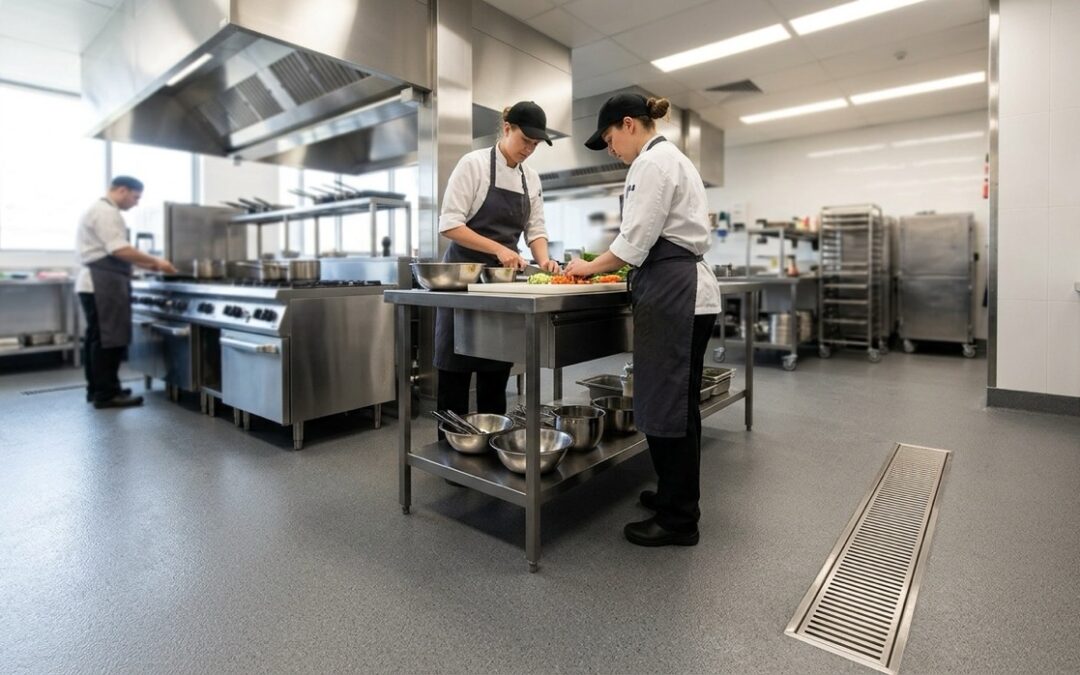
Operating a high-volume restaurant or commercial food processing facility comes with intense operational demands. Between heavy equipment movement, hot oil splatters, and relentless daily sanitation routines, concrete slabs take a severe beating. Installing a specialized epoxy floor in an industrial kitchen provides the seamless, resilient barrier required to protect your concrete substrate while keeping your workplace fully compliant with strict Australian health regulations.
Because the hospitality sector operates under strict hygiene mandates, traditional ceramic tiles with deteriorating grout lines no longer suffice. Incorporating a dedicated epoxy floor in an industrial kitchen ensures your facility remains safe, seamless, and easy to sanitize under high-stress operating conditions.
The Operational Hazards of Unprotected Kitchen Floors
Concrete slabs in restaurant kitchens endure continuous physical and chemical stress. Unprotected concrete or failing tiled surfaces quickly turn into costly compliance liabilities due to three major factors:
- Porosity and Bacterial Trap Points: Bare concrete absorbs liquids, animal fats, and organic juices. Over time, eroded grout lines act as breeding grounds for harmful bacteria like Listeria and Salmonella.
- Chemical Degradation: Organic acids, hot fats, and industrial-grade cleaning agents break down standard flooring sealers, leading to pitting, cracking, and eventual slab damage.
- Slip and Trip Hazards: Wet or greasy surfaces lead to workplace injuries. Without specialized aggregate broadcasts, smooth floors create unacceptable liability risks for kitchen staff.
5 Key Benefits of an Epoxy Floor in an Industrial Kitchen
At Diamond Grind, decades of trade experience demonstrate that high-performance resin systems yield the best return on investment for food service facilities. Investing in a professional epoxy floor in an industrial kitchen delivers immediate functional advantages:
1. Exceptional Durability Under Thermal and Physical Stress
Heavy-duty resin systems deliver true impact resistance. Unlike brittle ceramic tiles or thin roll-on paints, a heavy-duty epoxy floor in an industrial kitchen withstands constant foot traffic, heavy stainless steel rolling carts, and dropped cookware without chipping or delaminating.
2. Certified Slip Resistance (AS 4586 Compliance)
Water, fats, and cooking oils are unavoidable in active service zones. Professional resin installations incorporate graded aggregate broadcasts (such as aluminium oxide or quartz) to deliver certified slip-resistant surfaces up to R11 or P4/P5 ratings under Australian Standards (AS 4586).
3. Seamless, Non-Porous Hygiene Barrier
A continuous resin floor eliminates seams, expansion joints, and grout lines. Paired with radius wall coving, washdown water drains freely without pooling along baseboards, helping your facility pass council health inspections effortlessly.
4. Streamlined Maintenance and Reduced Cleaning Costs
Maintaining a hygienic space becomes significantly faster with seamless resin surfaces. Routine sweeping and mopping with neutral pH detergents remove surface contaminants quickly. Because the non-porous resin will not absorb stains or oils, your team spends less time scrubbing and zero money on stripping or waxing.
5. Long-Term Cost Savings and Lifecycle Value
While mechanical floor preparation and high-grade resin systems require a professional upfront investment, their longevity eliminates the costly downtime associated with frequent structural repairs. Properly installed systems outperform lower-grade paint sealers by years.
Selecting the Right Resin System for Your Facility
Not all commercial kitchen environments require the exact same floor specification. Depending on your thermal and chemical profile, selecting the right epoxy flooring system comes down to two primary technical solutions:
- 100% Solids High-Build Epoxy: Ideal for dry storage areas, walk-in pantries, plating zones, and general prep spaces requiring a durable, easy-to-clean finish.
- Polyurethane (PU) Cement Screeds: Essential for hot-wash lines, pan washers, and areas subject to thermal shock up to 120°C. PU cement expands and contracts at a rate similar to concrete, preventing delamination under boiling water spills.
Professional Installation: Why Concrete Preparation Matters
A long-lasting resin coating relies heavily on trade expertise during surface preparation. Applying resin over unconditioned concrete leads to premature adhesion failure. At Diamond Grind, every installation follows strict mechanical preparation protocols:
- Mechanical Diamond Grinding: Opens concrete pores and removes existing contaminants to achieve an ICRI Concrete Surface Profile (CSP) ideal for mechanical bonding.
- Keyway Cutting & Crack Repair: Cuts 6mm anchor keyways around drain perimeters and doorways to lock the resin matrix securely into the slab under thermal movement.
- Moisture Priming: Seals the substrate to eliminate rising damp and outgassing bubbles in subsequent resin coats.
- Body Coat & Aggregate Broadcast: Lays the primary resin layer and broadcasts anti-slip quartz to exact compliance specifications.
- Chemical-Resistant Topcoat: Locks in anti-slip aggregates with a durable clear or coloured finish, creating a cleaner, safer, and more compliant workspace.
Ready to upgrade your food prep environment? Contact the specialist team at Diamond Grind today for an expert site assessment and competitive estimate tailored to your facility.

FAQ,s

How long does an epoxy floor in an industrial kitchen take to cure before reopening?
Standard 100% solids epoxy systems generally require 24 to 48 hours for a full cure before foot traffic and equipment movement can resume. However, specialized fast-curing polyurethane cement systems can cure in as little as 6 to 12 hours, allowing commercial kitchens to schedule installations overnight or over a quiet weekend to avoid operational downtime.
What slip-resistance rating is required for an epoxy floor in an industrial kitchen?
Under Australian Standards (AS 4586), commercial kitchen floors must achieve an anti-slip rating of R11 to R12 or P4 to P5. Professional resin installers broadcast graded aggregates, such as aluminium oxide or quartz, into the wet body coat during installation to hit these exact compliance targets without creating a surface that is overly difficult to mop.
Is standard epoxy or polyurethane cement better under hot cooking equipment?
Polyurethane (PU) cement screeds are superior under cooking equipment, tilt fryers, and dishwashers. Standard epoxy coatings soften at temperatures above 60°C, whereas PU cement handles extreme thermal shock and direct boiling water washdowns up to 120°C without cracking or peeling from the concrete slab.
Can an epoxy floor in an industrial kitchen be installed directly over existing tiles?
While epoxy can adhere to heavily abraded ceramic tiles, removing old tiles and diamond-grinding the underlying concrete slab directly is strongly recommended. Tiled floors frequently contain hollow pockets and compromised grout lines underneath that trap moisture, which will cause the new floor overlay to delaminate over time.
✅ Let's Talk — DiamondGrind
100% free consultation — no commitment required.