
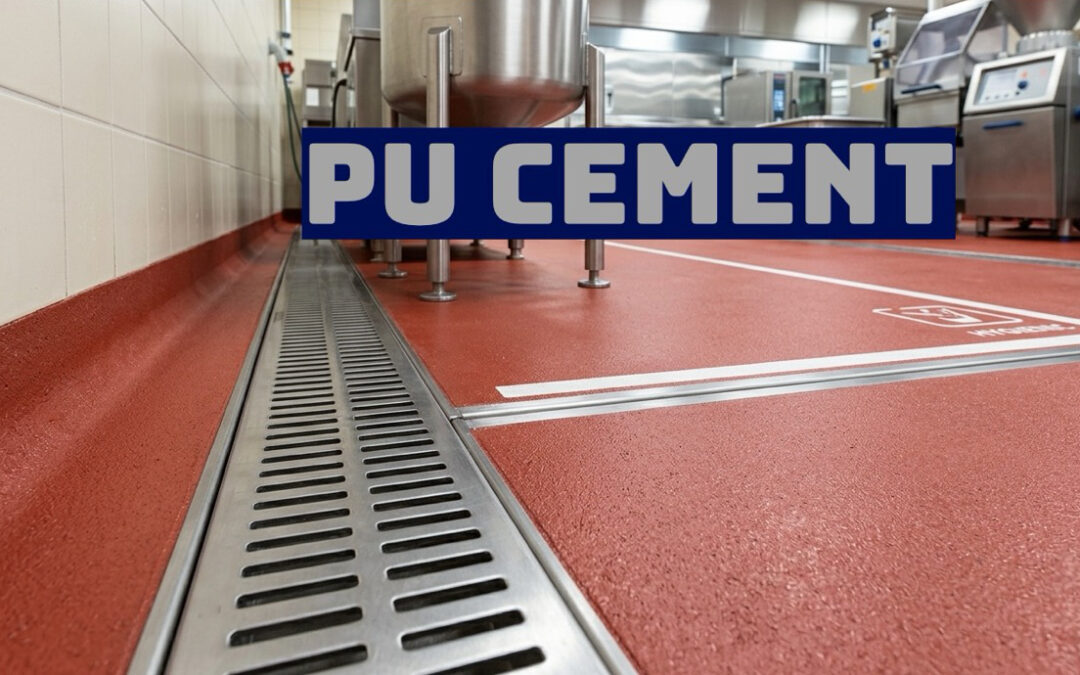
The Reality of Heavy-Duty Industrial Flooring
Industrial facilities operate under brutal conditions. Concrete slabs in food processing plants, commercial kitchens, and manufacturing hubs face constant chemical exposure, thermal shock from hot washdowns, and heavy impact from rolling machinery. Standard resin coatings frequently delaminate under this kind of punishment. That is where PU cement steps in as the definitive solution for high-stress workspaces.
Polyurethane cement composites are engineered by blending water-based polyurethane resins with Portland cement and graded aggregates. This specific chemical combination results in a flooring matrix that easily outperforms traditional epoxy toppings. For operations that cannot afford unexpected downtime, switching to a high-build PU cement system ensures years of trouble-free performance.
Key Operational Advantages of Polyurethane Cement
The primary reason commercial estimators specify PU cement is its unmatched durability and strength. These systems are typically laid at thicknesses between 4mm and 9mm, enabling them to absorb massive physical impacts from heavy equipment, pallet jacks, and dropped tools without fracturing. A professionally installed polyurethane floor routinely delivers an operational lifespan of up to 20 years under intense daily use.
Chemical vulnerability is another fatal flaw for basic concrete surfaces. Organic acids, aggressive cleaning agents, and industrial chemical spills can rapidly corrode bare slabs. A core strength of PU cement is its profound resistance to acids, alkalis, and solvents. In dairy production, commercial bakeries, and breweries, the floor easily withstands prolonged contact with lactic acid, sugars, and fats—natural contaminants that dissolve standard coatings.
Essential Applications Across Sydney Industries
The food and beverage industry requires strict compliance with strict food safety and hygiene regulations. Because PU cement sets as a completely seamless, non-porous monolithic slab, it leaves no grout lines or cracks where bacteria, mould, and grime can accumulate. It can be turned up at the walls using a coved backing strip, creating an easily sanitised, washdown-ready finish perfect for meatpacking plants and commercial food preparation areas.
Manufacturing plants and heavy engineering warehouses place different, mechanical demands on a floor. Forklift traffic, heavy pallet storage, and constant dragging of components require high compressive strength. The immense load-bearing capacity of specialized PU cement variations ensures the floor remains completely unyielding under the weight of industrial storage configurations and production lines.
Texture Options and Custom Design
While durability remains the core priority, industrial installations do not have to look dull. Modern commercial formulations come in a range of stable, clean colours to help delineate safety paths, pedestrian walkways, or specific work zones. Texture profiling can also be fine-tuned during application. Installers broadcast quartz aggregates into the wet resin to achieve a highly textured finish, providing critical slip protection in naturally wet or oily environments.
For custom commercial environments or branding initiatives, specialized application techniques allow for the integration of crisp safety lines, zoning grids, or company emblems directly into the floor. This clean look turns high-performance production zones into pristine, brand-aligned environments suitable for client inspections.
The Precision Installation Framework
A flawless flooring installation always relies on mechanical surface prep. At Diamond Grind, we perform deep diamond grinding or shot blasting to open up the concrete substrate’s pores, profiling the slab to achieve a perfect mechanical bond. This critical initial stage represents roughly 70% of the structural success of the entire system. Without proper profiling, no high-grade resin can adhere permanently.
The actual chemical mixing and application phase requires precision timing and experienced trade hands. Polyurethane resins cure rapidly, meaning the material must be mixed, spread with a pin rake, and trowelled flat within tight environmental windows. Attempting a DIY application with commercial-grade composites inevitably results in blistering, cold joints, and premature system failure. Relying on an expert contractor guarantees long-term durability.
Sydney’s Industrial Flooring Specialists
Choosing the right industrial coating is a long-term operational investment. At Diamond Grind, we manage your commercial flooring upgrade from initial site assessment and aggressive floor preparation through to precision system application. Whether you need a texturized safety profile for a busy kitchen or a high-gloss, chem-resistant layout for a packing facility, our teams deliver an immaculate finish.
Contact our Sydney office today to discuss your site specifications with an experienced estimator and secure a comprehensive project quote.
FAQ,s

What makes PU cement superior to traditional epoxy flooring in food factories?
Thermal shock resistance is the deciding factor. Epoxy coatings expand and contract at a completely different rate than the underlying concrete slab, meaning hot washdowns (up to 120°C) cause epoxy to crack and delaminate. PU cement expands and contracts at a near-identical rate to concrete, allowing it to withstand extreme temperature fluctuations without lifting or failing.
How thick does a polyurethane cement floor need to be applied?
Application thickness generally ranges between 4mm and 9mm, depending entirely on your site requirements. A 4mm to 6mm build is ideal for standard pedestrian traffic, commercial kitchens, and moderate chemical exposure. For heavy industrial areas experiencing forklift traffic, severe physical impact, or daily high-temperature steam cleaning, a robust 9mm layer is specified.
How long does a PU cement installation take to cure before operations can resume?
One of the greatest operational benefits of polyurethane concrete composites is their rapid cure cycle. While standard epoxies can require several days to fully cure, a high-grade polyurethane cement system can often accept light pedestrian foot traffic within 8 to 12 hours and return to full mechanical and chemical service in 24 to 48 hours, minimizing facility downtime.
Can PU cement be applied over old, damaged, or oil-contaminated concrete slabs?
Yes, provided the slab undergoes rigorous mechanical preparation first. We use heavy diamond grinding or shot blasting machinery to completely strip away weathered concrete, old adhesives, and surface contaminants. If deep oil saturation is present, we use specialized degreasers and moisture-tolerant primers to ensure the new overlay achieves an unbreakable structural bond.
✅ Let's Talk — DiamondGrind
100% free consultation — no commitment required.