
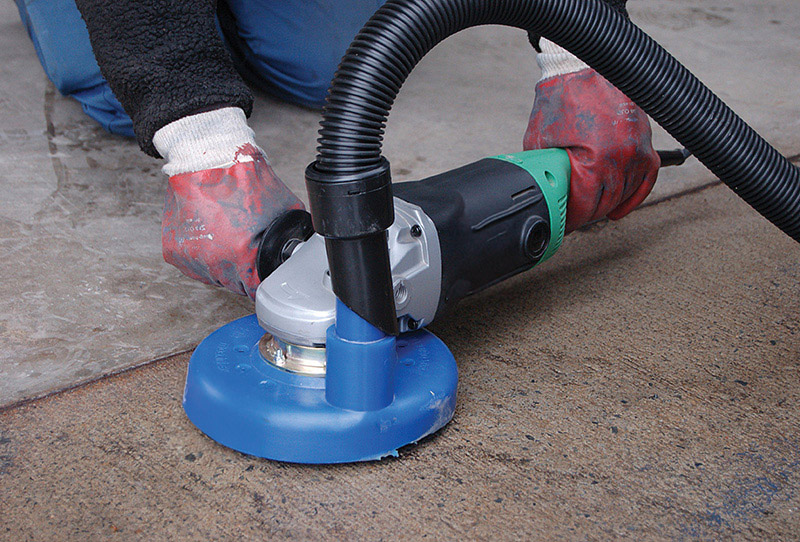
The Importance of Floor Surface Preparation
The condition of a concrete slab and its overall cleanliness are completely crucial for the long-term durability and adhesion of any coating you decide to apply over it. Bearing this structural reality in mind, it is no wonder that proper floor surface preparation plays a major role in the success of the entire installation process.
No matter which protective top coating you decide to apply, for its optimum performance, you must ensure that you take all necessary steps to profile the concrete substrate correctly. Professional concrete floor preparation is the number one way to prevent peeling, bubbling, or uneven finishes down the track.
What Is Floor Surface Preparation?
Essentially, this mechanical process involves grinding down or treating the existing concrete substrate to ensure a smooth, completely defect-free profile. This profile enables a permanent mechanical bond between the porous concrete and your final choice of surface coating. Whether discussing spaces in your family home, modern office, or busy industrial facility, deep concrete conditioning is absolutely essential for structural floor restoration or replacement.
There are different methods for concrete floor preparation, and while you might find simple DIY suggestions online, the most effective approach requires specialised planetary machinery. Commercial equipment removes old elements like stubborn paint, degraded sealers, thick epoxy, and carpet adhesives safely and quickly. Industry-proven methods such as diamond grinding and shot blasting help achieve an immaculate surface without micro-fracturing the underlying slab, which is a crucial phase of proper floor surface preparation.
Improperly Prepared Concrete Substrates: Which Problems Can Arise?
Sometimes, even if you manage to force a new coating over a poorly prepared or contaminated slab, you might not spot the structural issues immediately. One thing is guaranteed—after a short period of foot or vehicle traffic, failure will appear, and you will likely have to pay double the original price to grind it all back and restart from scratch.
Concrete floors are hard and sturdy but will quickly deteriorate without professional mechanical intervention. Just because you cannot see the raw concrete beneath your decorative floor coverings doesn’t mean you can leave it unaddressed. You must ensure that it is completely clean, that structural cracks are filled with high-strength epoxies, and that the entire profile is flat. At times, severe damage means you might even have to significantly repair or replace the slab entirely.
If you fail to execute thorough floor surface preparation, you can expect premature delamination, random hollow spots, poor chemical adherence, and unlevel zones. These defects quickly become hazardous to both walking staff and heavy rolling machinery, while directly impacting furniture stability in commercial settings.
5 Critical Floor Surface Preparation Steps for Concrete
1. Thorough Surface Inspection and Hardness Testing
Before touching the slab, a professional estimator must inspect the concrete for deep contamination, cracks, and moisture levels. Testing the concrete’s hardness ensures the right diamond abrasive grit is selected for successful floor surface preparation.
2. Deep Contaminant Chemical Removal
Old carpets, stubborn tile glues, curing compounds, and deep-set oils must be completely stripped away. Any chemical or grease left behind acts as a barrier, preventing your new floor surface preparation efforts from achieving a proper bond.
3. Mechanical Planetary Diamond Grinding
Using professional planetary grinding machines or shot blasting equipment is the core phase of floor surface preparation. This mechanical step shaves down imperfections, opens up the concrete pores, and creates an ideal profile for the coating to grip.
4. Structural Crack and Joint Repair
Every crack, spalled joint, or divot in the slab must be filled with a high-strength epoxy or polyurethane patching compound. Smooth patching guarantees your final floor surface preparation results in a perfectly flat, mirror-like finish.
5. Industrial Vacuuming and Dust Elimination
The final step before coating application is total dust extraction. Using micro-filter industrial dust collectors ensures no fine powder remains on the concrete, sealing the success of your comprehensive floor surface preparation routine.
Crucial Environmental Factors to Consider
Even when dealing with a newly poured concrete surface, you must be cautious. Fresh concrete contains immense amounts of residual moisture, meaning it must be allowed to cure completely to drop its moisture vapour emission rate before a resinous system seals it in. You must also account for ambient variables like air temperature, substrate temperature, and the relative humidity in the room, as these all heavily dictate curing windows before coating application begins.
If you plan to replace your current flooring system with a new treatment, it is highly recommended to consult concrete specialists before deciding on an overlay. An experienced estimator can accurately inspect your slab’s condition and advise on accurate costs, potential structural complications, and the exact level of mechanical grinding required.
Additionally, older concrete slabs that have been in use for years are often heavily contaminated by deep-set grease, oils, tire marks, and chemicals. Determining whether these contaminants are present allows our teams to tailor the mechanical floor surface preparation steps to completely remove them.
Looking For Professional Floor Surface Preparation in Sydney?
We hope this breakdown has highlighted the absolute importance of structural concrete preparation before laying down any new flooring systems. If you are searching for a reliable, heavily equipped flooring team across the Sydney and greater NSW area, Diamond Grind is here to help at any time.
Whether you need to pull up old commercial carpet to install vinyl sheets, upgrade worn painted surfaces with a heavy-duty epoxy coating, or require specialised floor profiling for a polyurethane cement installation, our crews do it all. We combine highly skilled operators with state-of-the-art dustless grinding equipment to get the job done quickly and cleanly.
Our estimators provide clear, comprehensive breakdowns right on-site so you know exactly how long the floor surface preparation will take and what the investment will be. From premium residential garage makeovers to heavy industrial warehouse floor preparation, we also offer high-end concrete polishing to leave your floors immaculate. Contact us today to discuss your next project.
FAQ,s

Why does a new concrete slab still require mechanical floor surface preparation?
Even brand-new concrete slabs cannot be coated immediately. As new concrete cures, a weak, powdery layer of fine particles called “laitance” rises to the top surface. If you apply epoxy or sealer directly over laitance, the coating will bond to the loose powder rather than the solid slab, causing it to peel off rapidly under normal use. Diamond grinding removes this weak layer to expose the sound concrete beneath.
What is the difference between diamond grinding and shot blasting for concrete prep?
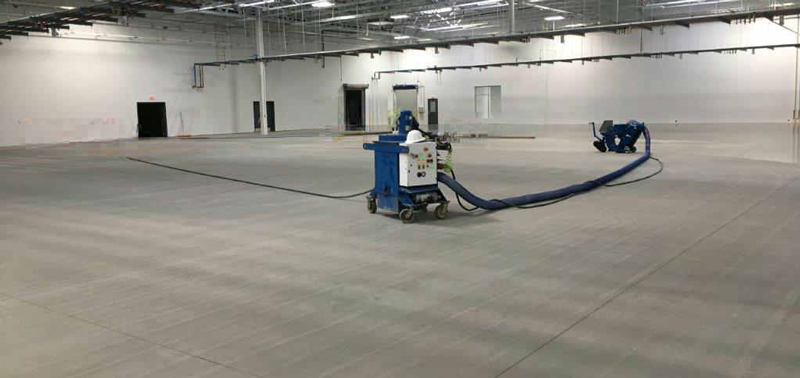
Both are excellent methods but serve different purposes. Diamond grinding uses rotating diamond-impregnated discs to smoothly shave down the concrete surface, remove old glues, and flatten out minor high spots. Shot blasting fires tiny steel balls at high velocity into the concrete to blast away heavily contaminated top layers, leaving a rougher profile that is perfect for thick self-levelling underlayments and heavy industrial screeds.
How do you treat grease or oil stains locked inside an old concrete floor?
Oil and grease are deep-set contaminants that stop floor coatings from bonding. For effective floor surface preparation, these areas must first be treated with professional-grade degreasers or chemical neutralisers to draw the oils to the surface. Once neutralised, heavy mechanical diamond grinding or shot blasting is used to grind away the contaminated concrete layer until clean, porous stone is reached.
Can I save money by using an acid wash instead of mechanical grinding?
While acid etching is a common DIY suggestion, it is highly discouraged for commercial projects. Acid only works on clean, bare concrete and cannot remove old paints, glues, or grease. Furthermore, it introduces massive amounts of water deep into the slab, which extends drying times dramatically and can trap moisture beneath your new coating, leading to blistering and bubbles. Mechanical diamond grinding is always the safest and most reliable method.
✅ Let's Talk — DiamondGrind
100% free consultation — no commitment required.