
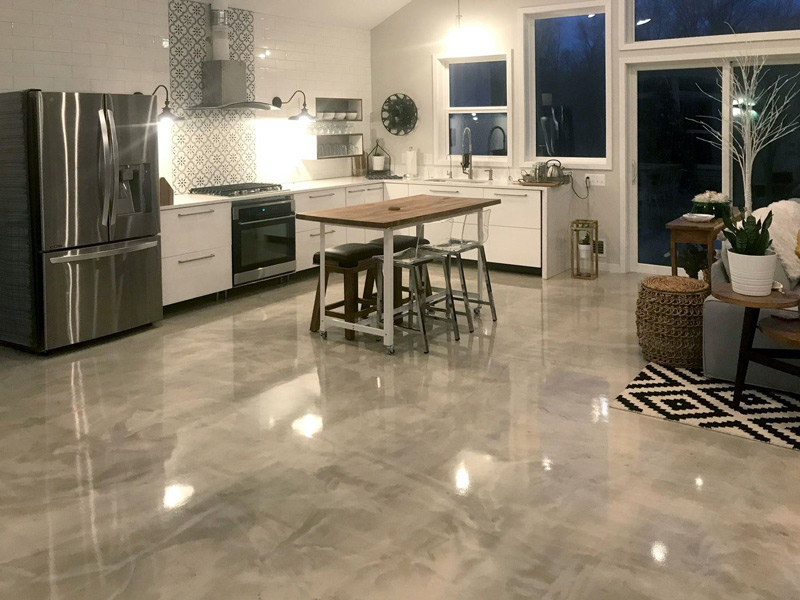
Residential Resin Surfaces: Modern Epoxy Flooring at Home
If you are looking for a premium, seamless alternative to traditional timber, terrazzo, or ceramic tiles, installing epoxy flooring at home offers an exceptionally durable and low-maintenance upgrade. Once reserved primarily for industrial warehouses, resin-based systems have fast become a high-end choice for contemporary residential interiors, garages, patios, and entertainment areas.
While installing epoxy flooring delivers striking aesthetic options—from ultra-clear topcoats to metallic finishes and flake patterns—choosing the right system requires understanding how resin surfaces perform in domestic environments. Here is an honest, trade-level breakdown of the pros and cons of residential epoxy systems.
Advantages of Epoxy Flooring at Home
Unmatched Mechanical Durability
One of the biggest advantages of epoxy flooring at home is its structural durability. High-grade epoxy resins bond directly to the underlying concrete substrate, creating a surface far more impact-resistant than timber floating floors or brittle porcelain tiles. It comfortably resists heavy vehicle loads, high heels, dragging furniture, household chemical spills, and pet claws without chipping or gouging.
Enhanced Safety and Slip Resistance
While high-gloss surfaces may look slick, professional installers apply aggregate additives (such as aluminum oxide or glass micro-spheres) into the final topcoat. This ensures that your epoxy flooring at home achieves certified anti-slip profiles tailored to dry living rooms or wet zones, providing a safe, slip-resistant finish throughout your living spaces.
Effortless Cleaning and Hygiene
Unsealed concrete and tiled floor grout trap dirt, mold, and dust mites. Choosing epoxy flooring eliminates grout lines entirely, creating a non-porous barrier that repels water, wine, oil, and pet accidents. A simple weekly dust-mop and damp microfiber wipe keeps your resin floor pristine—no harsh acids or aggressive scrubbers required.
Eco-Friendly and Indoor-Air Safe
Modern 100% solids resin systems release zero or low Volatile Organic Compounds (VOCs), making epoxy flooring at home an eco-friendly and healthy choice for indoor living areas. Furthermore, by encapsulating existing concrete slabs, epoxy reduces material waste associated with replacing worn carpets or cracked tiles.
Custom Architectural Designs
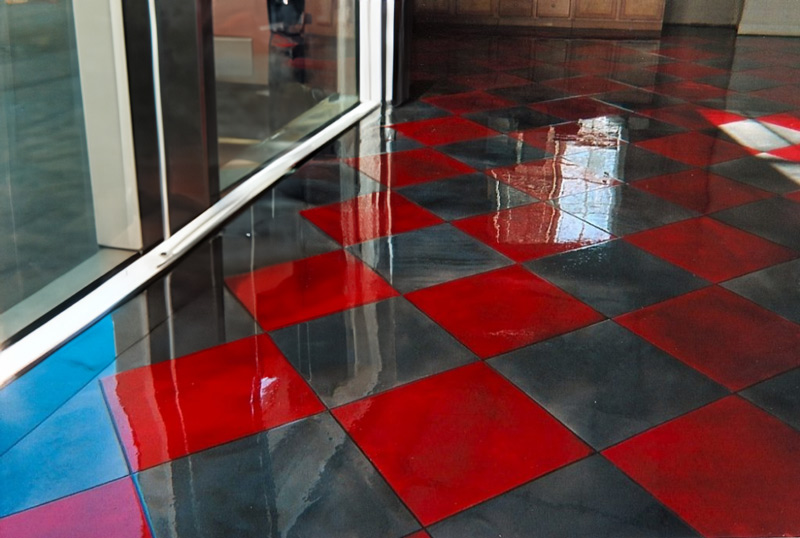
Residential epoxy coatings offer endless customization options. Homeowners can select from subtle neutral tones, decorative vinyl flake broadcasts (popular for residential garages and alfresco spaces), seamless faux terrazzo, or high-gloss metallic pigments. Our trade specialists at Diamond Grind can help you design custom epoxy flooring to match your architectural aesthetic.
Simple Surface Restoration
Unlike tiles, which require complete removal when damaged, epoxy flooring at home can easily be rejuvenated. After years of heavy foot traffic, a commercial floor contractor can lightly profile the top layer and reapply a clear protective topcoat, instantly restoring your floor to like-new condition without expensive structural replacement.
Disadvantages of Epoxy Flooring (And How to Prevent Them)
Moisture Vapour Sensitivity
The primary reason residential epoxy installations fail is underlying slab moisture. Unsealed ground-level slabs or basements can push hydrostatic moisture up through the concrete, causing the epoxy membrane to bubble, blister, or delaminate over time.
The Solution: Professional Moisture Testing & Priming
Professional installers perform moisture tests on your concrete slab prior to coating. If moisture vapour transmission is high, we apply a specialized epoxy moisture barrier coat before putting down your decorative finish. Avoid DIY roll-on kits that skip essential concrete floor preparation and slab testing.
Are You Ready to Install Epoxy Flooring at Home?
Diamond Grind is a trusted provider of premium residential and commercial resin systems, supplying expert epoxy flooring across Sydney and surrounding areas. We handle every stage of installation—from heavy-duty diamond grinding to final protective topcoats—ensuring your epoxy flooring at home looks stunning and lasts for decades.
Ready to upgrade your home’s concrete surfaces? Contact Diamond Grind today for an accurate site assessment and competitive quote.
FAQ,s

Is epoxy flooring suitable for indoor living areas at home?
Answer: Yes. Low-VOC, 100% solids epoxy systems are completely non-toxic once cured, making them safe, hygienic, and stylish options for living rooms, kitchens, hallways, and home offices.
How long does epoxy flooring at home typically last?
Answer: When installed over properly prepared concrete with a UV-resistant topcoat, residential epoxy flooring routinely lasts between 10 to 20 years with minimal maintenance.
Are epoxy floors cold or hard underfoot compared to timber?
Answer: Epoxy adopts the natural ambient temperature of the underlying concrete slab. While it feels firm underfoot like tile or polished concrete, it can be combined with underfloor heating systems or localized area rugs for added warmth in winter.
Can you apply epoxy flooring directly over existing floor tiles?
Answer: While epoxy can be applied over tiles, it requires thorough diamond grinding to glaze the tiles and level the grout lines. In most cases, removing the tiles and grinding the underlying slab directly delivers a significantly stronger, longer-lasting bond.
✅ Let's Talk — DiamondGrind
100% free consultation — no commitment required.