
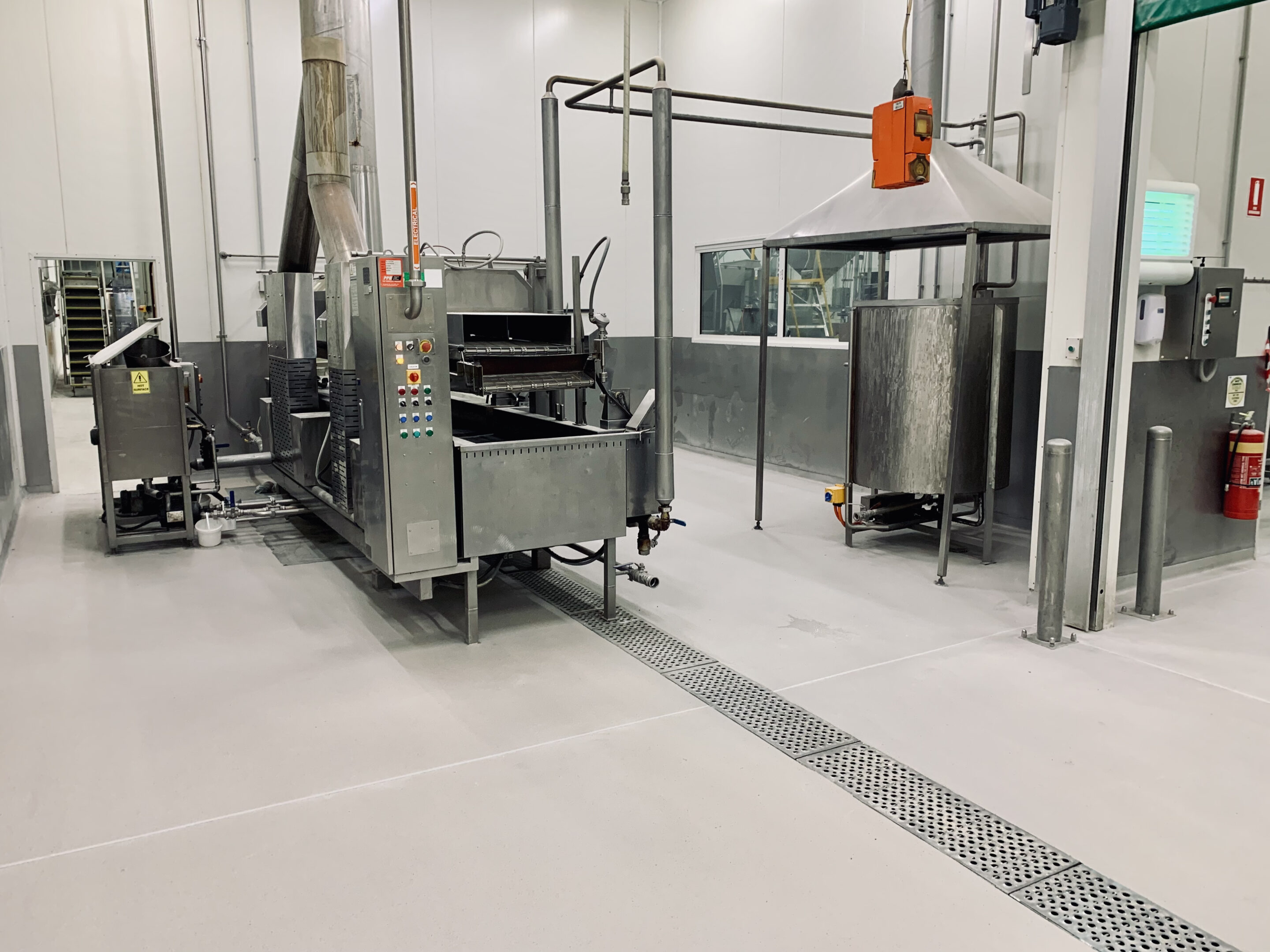
Selecting high-performance industrial food and beverage flooring is a critical engineering decision during facility design, plant upgrades, and commercial kitchen fit-outs. Food processing environments present some of the most aggressive working conditions for concrete slabs—including daily thermal shock, hot water washdowns, organic fat exposure, heavy forklift traffic, and continuous chemical cleaning. Specifying the wrong surface coating leads to rapid delamination, costly operational downtime, and severe health compliance penalties.
At Diamond Grind, we work directly with food manufacturers, commercial kitchen managers, and facility engineers across New South Wales to deliver seamless, HACCP-compliant surfaces. Here is a technical breakdown of the key operational factors to consider and the best industrial food and beverage flooringsystems available.
Key Operational Factors When Selecting Food-Grade Floors
Before choosing a specific resin or concrete treatment, facility operators must evaluate the physical and chemical conditions present within each zone of their processing plant.
1. Chemical and Thermal Shock Resistance
Different production areas expose slabs to distinct liquids. Fermentation vats, dairy processing lines, and citrus packing plants release aggressive organic acids, while commercial washdown bays utilize high-pressure hot water combined with harsh alkaline detergents. Flooring systems must withstand these thermal and chemical shifts without cracking or softening.
2. Traffic Load and Impact Resistance
Processing plants move heavy equipment, pallet jacks, and forklifts daily. Your industrial food and beverage flooring must offer high compressive strength to withstand point loading and structural impact without chipping or spalling.
3. Budget vs. Lifecycle Value
While low-cost coatings may seem appealing initially, inadequate surface protection leads to premature coating failure, frequent patch repairs, and potential site shutdowns. Investing in fit-for-purpose floor systems delivers significantly lower total cost of ownership over a 10 to 20-year lifespan.
Top 3 Flooring Systems for Food & Beverage Facilities
Depending on the specific processing environment—from ambient dry packaging zones to wet, high-temperature cooklines—three core flooring systems lead the industry:
1. Polyurethane Cement Flooring (Heavy-Duty Food Grade)
A heavy-duty polyurethane cement floor is widely regarded as the ultimate heavy-duty specification for food processing, slaughterhouses, beverage bottling plants, and commercial cooklines. Applied as a thick resinous screed, polyurethane cement shares a similar thermal expansion rate to the underlying concrete slab, preventing delamination during boiling washdowns up to 120°C.
This seamless, non-porous system prevents bacterial, mould, and grease penetration while providing built-in anti-slip textures. Fully HACCP-compliant and chemical-resistant, polyurethane cement is the premier solution for wet, high-impact processing environments.
2. Industrial Epoxy Floor Systems
For dry storage zones, packaging areas, bottling lines, and secondary processing spaces, an industrial epoxy floor offers outstanding protection. Epoxy forms an impenetrable, high-build barrier over concrete, resisting petroleum products, solvents, and general commercial traffic.
With a service life of up to 10 years when properly maintained, seamless epoxy systems eliminate grout lines and cracks, making daily sanitation fast and straightforward across medium-duty commercial areas.
3. Commercial Polished Concrete Flooring
In dry warehousing, distribution centres, and front-of-house retail zones, a commercial polished concrete floor provides a highly sustainable, dust-proof surface. Ground with industrial diamond grit machinery and treated with liquid chemical densifiers, polished concrete withstands heavy forklift traffic without flaking or peeling.
While highly durable and capable of lasting up to 20 years, polished concrete can suffer acid-etching if exposed to unmitigated citrus, vinegar, or harsh acids. Therefore, it is best specified in dry storage and low-chemical handling areas rather than active cooklines.
The Importance of Professional Mechanical Substrate Preparation
Even the highest-grade resin or screed will fail prematurely if applied to poorly prepared concrete. Over 90% of coating failures stem from inadequate surface preparation, moisture contamination, or laitance accumulation on raw slabs.
At Diamond Grind, we utilize dust-free mechanical diamond grinding and shot-blasting to achieve the exact concrete surface profile (CSP) required for maximum mechanical adhesion. Whether installing new resin or executing specialized repairs, proper preparation ensures your industrial food and beverage flooring forms an unbreakable bond with the slab.
Partner with NSW’s Industrial Flooring Specialists
Choosing and installing the correct floor system requires specialized trade expertise to avoid costly mistakes, health code violations, and unnecessary downtime. Diamond Grind delivers complete turn-key solutions—from initial site inspection and moisture testing to mechanical preparation and final resin application—for food and beverage clients across Sydney, Newcastle, and the Central Coast.
To evaluate your facility’s requirements or request an on-site technical inspection, contact our flooring specialists today.
FAQ,s

What is the most durable industrial food and beverage flooring system for wet cooklines?
Polyurethane cement flooring (also known as PU screed or PU cement) is the most durable system for active food processing and cooklines. It handles thermal shock from hot water washdowns up to 120°C, resists harsh organic fats and cleaning chemicals, and provides certified non-slip safety under wet conditions.
Why are traditional tiles unsuitable for food and beverage plants?
Commercial tiles rely on porous cementitious grout lines that absorb grease, moisture, and food waste over time. This creates breeding grounds for bacteria like Listeria and Salmonella, while heavy pallet jacks frequently crack tile edges, leading to costly health safety hazards.
Are industrial epoxy and polyurethane cement floors HACCP compliant?
Yes. Both seamless industrial epoxy coatings and polyurethane cement systems meet strict Food Safety Australia and HACCP compliance standards because they form an impervious, non-porous layer with no seams or grout lines to harbour bacteria or dirt.
Can industrial floor installations be completed quickly to avoid plant downtime?
Yes. Professional trade contractors can utilize rapid-curing polyurethane screeds or polyaspartic coatings that allow full foot traffic within 12 to 24 hours. Work can also be scheduled during planned maintenance shuts or weekend windows to minimize operational disruptions.
✅ Let's Talk — DiamondGrind
100% free consultation — no commitment required.