
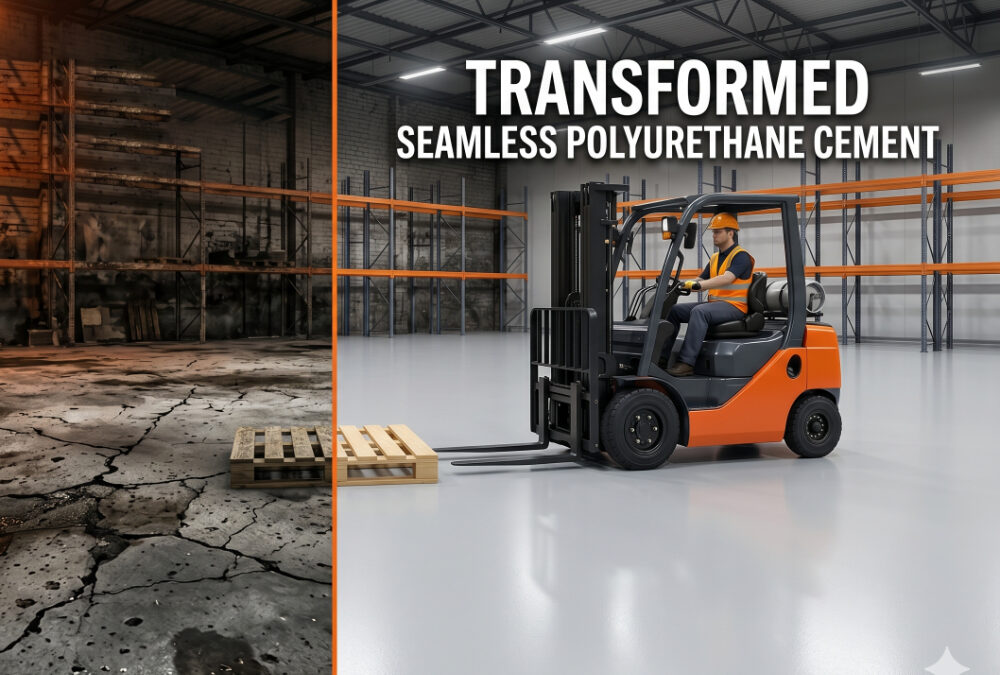
If you are looking to upgrade a worn-out facility floor, installing **polyurethane cement over old concrete** is one of the smartest ways to get a bulletproof finish without the massive cost of tearing out your existing slab. In almost every case, revitalising an old floor is entirely possible. However, the ultimate success of the job comes down to one absolute rule: the old concrete must be meticulously prepped so the new resin layer can bite into the surface and bond forever.
Can You Install Polyurethane Cement Over Old Concrete Successfully?
While there are plenty of DIY videos online claiming you can just roll a new coating over a worn slab, cutting corners is the fastest way to face peeling, bubbling, and costly repairs down the track. The only guaranteed way to protect your investment is to have a team of professionals inspect your base concrete first. Whether you need a thick, heavy-duty polyurethane cement screed to handle thermal shocks or a high-gloss epoxy flooring system, proper assessment makes all the difference.
Here are the four critical steps required to successfully install a new resin system over an old concrete base:
1. The Floor Must Be Completely Stain-Free
Before any new coating is applied, your old concrete needs to be completely stripped of deep-set stains, old grease, and surface debris. While sweeping and mopping might seem like enough, industrial oils can soak deep into concrete pores over the years. Hard-to-reach areas like corners and edges require extra attention. If any oil remains, the new resin will sit on top of the grease instead of bonding to the concrete, causing the floor to peel later under heavy traffic.
2. Double-Check for Trapped Moisture
If your old concrete slab is holding dampness or drawing moisture up from the ground, it will reject a new resin layer. Checking for trapped moisture is a vital step. A simple way to spot an obvious issue is to tape a square sheet of thick plastic tightly to a section of the floor. After 24 to 48 hours, check underneath the plastic. If you see condensation or dark patches on the concrete, you have a moisture problem that requires professional moisture barriers before any flooring can go down.
3. Mechanical Surface Preparation is the Ultimate Key
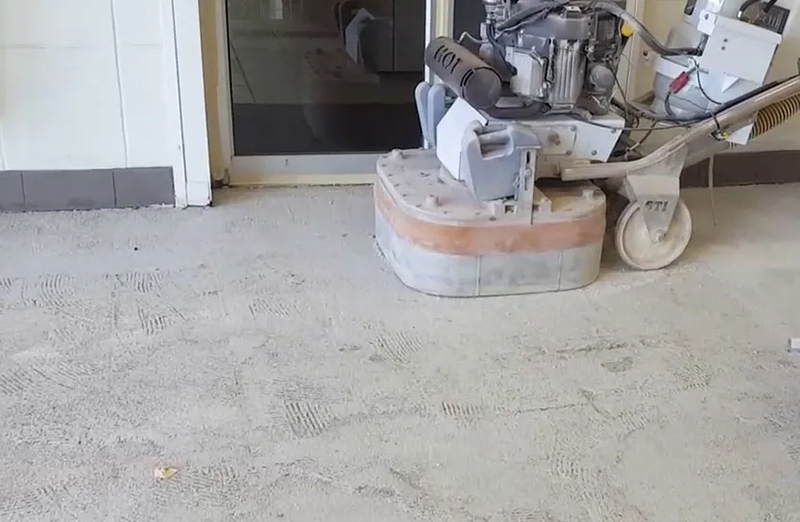
You cannot just pour resin onto smooth, old concrete. To get a permanent bond when putting polyurethane cement over old concrete, the surface must be mechanically altered to create a rough texture (known as a concrete surface profile). This is where professional industrial diamond grinding and shot blasting come into play. Grinding opens up the concrete pores and strips away weak top layers, giving the new resin a perfect profile to grip onto securely.
4. Old Paint and Sealers Must Go
If your existing concrete has old floor paint or clear concrete sealers on it, you cannot apply a new resin coating directly over them. New polyurethane or epoxy systems will only adhere as well as whatever is underneath them. If the old paint flakes off, your expensive new floor goes with it. All old coatings must be completely ground down to bare, raw concrete to ensure the new installation doesn’t fail.
Protecting Your Investment with a Quality Topcoat
Once your main flooring layer is down, applying a high-grade protective topcoat is always a wise investment. Depending on your specific daily operations and budget, a tailored topcoat adds an extra shield against heavy water use, harsh cleaning chemicals, and intense physical impacts. It gives you absolute peace of mind that your freshly resurrected floor will look great and stay intact for years to come.
Ready to Resurrect Your Worn-Out Concrete?
Transforming an old, tired slab into a compliant, high-performance workspace is entirely doable, but it requires the right gear and experience. Whether you are upgrading a restaurant kitchen, a busy warehouse, a commercial garage, or a cold storage room, a professional resin install can completely change how your business operates.
If you want the job done right the first time, you can always count on the team at Diamond Grind. Serving Sydney and regional NSW for years, we have tackled every challenge that old concrete can throw at us. We use only top-tier products and heavy-duty machinery to deliver a floor that lasts. Contact Diamond Grind today to discuss your project and get a professional cost estimate.
FAQ,s

Can you put polyurethane cement over old concrete that is badly cracked?
Yes, but the cracks cannot simply be painted over. Every individual crack, divot, or spalled joint must first be mechanically chased out, cleared of dust, and filled with a high-strength epoxy or polyurethane repair mortar. Once the patches are cured and ground flat with the rest of the slab, the main polyurethane cement layer can be applied seamlessly over the top.
What happens if you install polyurethane cement over old concrete without grinding it?
If you skip mechanical diamond grinding, the installation is highly likely to fail. Old concrete often has a smooth, tightly sealed surface or a layer of invisible contaminants like grease and old soap. Without grinding to open up the concrete pores, the polyurethane cement cannot form a mechanical bond, leading to the floor delaminating, blistering, and peeling off under wheel traffic.
How thick does polyurethane cement need to be when applied over old slabs?
In typical commercial and industrial settings, polyurethane cement screeds are applied at a thickness of 4mm to 9mm. The exact thickness depends on the condition of your old concrete and the demands of your industry. For instance, spaces dealing with heavy forklift traffic, extreme physical impacts, or boiling water washdowns require a thicker 6mm to 9mm layer to cope with the stress.
How long do we have to wait to walk on the floor after installation?
One of the greatest benefits of polyurethane cement is its rapid cure time. In standard Australian conditions, the floor can handle light foot traffic in as little as 8 to 12 hours after the final coat is applied. Full operational use—including heavy forklifts and chemical washdowns—is usually good to go within 24 to 48 hours, meaning minimal downtime for your business.
✅ Contact Diamond Grind
by Email or 1800 587 172
for an obligation FREE consultation.