
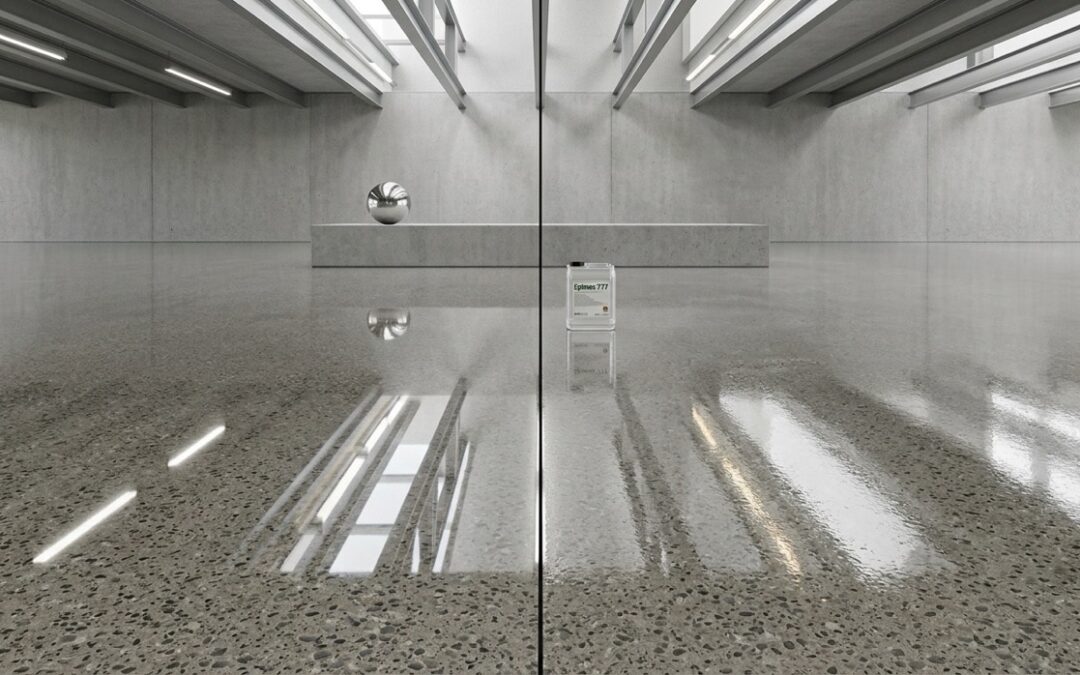
How to Choose? Polished Concrete vs. Grind and Seal Floors
When planning a renovation or new build, one of the most common questions we hear is: “What is the difference between mechanically polished concrete vs. grind and seal?”
It is a fair question, as both options provide a stunning transformation for your space. However, each has unique features, benefits, and price points. This guide will help you decide which finish is the right fit for your specific concrete flooring project.
What is a Mechanically Polished Concrete Floor?
Mechanically polished concrete (MPC) is the premium process of refining a standard concrete slab into a smooth, marble-like finish. Many homeowners and architects consider this the gold standard for a polished concrete floor in terms of luxury, reflection, and lifelong durability.
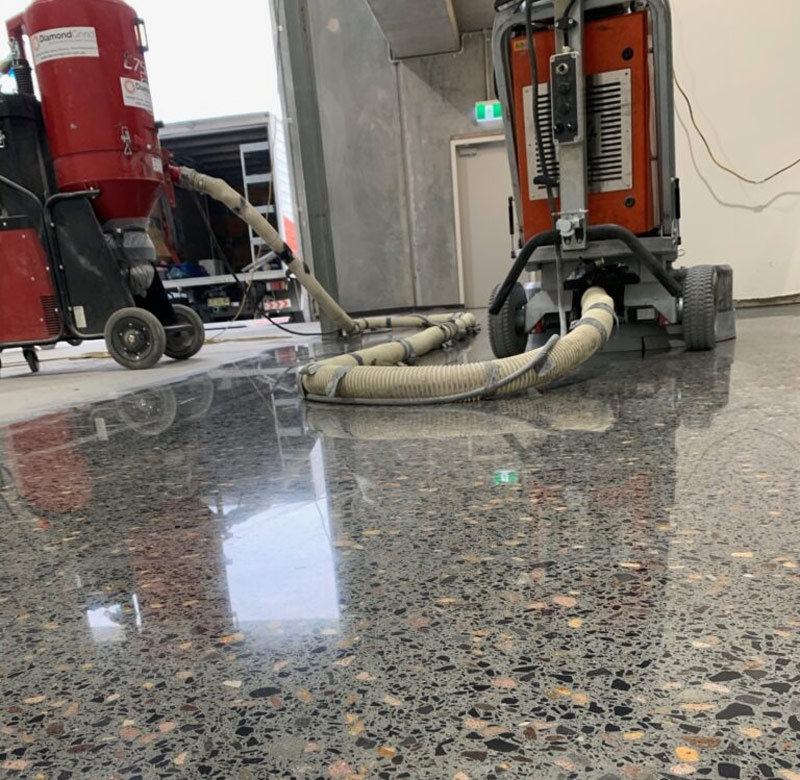
At Diamond Grind, we often utilise the Husqvarna HIPERFLOOR® Premium system. This decorative, high-gloss finish is ideal for exposed aggregate floors in retail showrooms, high-end warehouses, and modern homes where reflectivity is a top priority. The result is a surface that shines and offers exceptional durability using diamond tooling, liquid grouting, and specialised sealing chemicals.
The Mechanically Polished Concrete Process
To achieve a world-class polished concrete floor, we follow a rigorous multi-step refinement process:
- Initial Grind: Expose the desired stones using 30-grit metal bond diamond tooling.
- Scratch Removal: Refine the surface with 60-grit metal bond diamonds.
- Grouting: Apply liquid grout while removing scratches with 120-grit diamonds to fill an estimated 95% of pinholes and cracks.
- Hardening: Densify the slab using Husqvarna potassium densifier.
- Honing: Use both 50 and 100-grit resin bond diamond tooling.
- Second Hardening: Apply Husqvarna lithium densifier for maximum strength.
- Polishing Phase: Achieve your desired sheen:
- Matte Finish: 200–400 grit resin bond polishing pads.
- Mid-Gloss Finish: 400–800 grit resin bond polishing pads.
- High-Gloss Finish: 800–3000 grit resin bond polishing pads.
- Protection: Apply 1–2 coats of Husqvarna Hiperguard premium penetrating sealer.
- Final Buff: Enhance the ultimate shine and floor clarity.
Features and Benefits of Mechanically Polished Concrete
- Higher abrasion resistance for heavy traffic
- Low maintenance and easy to clean
- Smooth and luxurious feel underfoot
- Extremely durable and environmentally friendly low VOC system
- Suitable for premium commercial and residential properties
What is a Grind and Seal Concrete Floor?
This particular concrete finish is the process of taking an everyday slab and turning it into a smooth, attractive, and economically priced floor utilising a high-quality topical coating to achieve its look. This differs completely from MPC, which relies entirely on mechanical refinement rather than a surface film.
We utilise industry-leading equipment from Husqvarna alongside high-performance sealers from Epimax Technologies to deliver this budget-friendly alternative.
The Step-by-Step Sealing Process
The typical process for achieving a full-exposure grind and seal concrete floor includes:
- Initial Grinding: Expose the right amount of stones using 30-grit metal bond diamond tooling.
- Refining: Remove large scratches across the slab using 60-grit metal bond diamonds.
- Patching: Fix minor holes and structural cracks using anchor patch filler.
- Smoothing: Clean up remaining scratches using 120-grit diamonds or 50-grit transition pads.
- Epoxy Prime: Apply two coats of Epimax 999WB water-based epoxy sealer.
- Topcoat: Apply one final coat of Epimax 777 water-based Polyurethane sealer in either a matte or gloss finish.
Features and Benefits of This Finish
- More cost-effective than premium mechanically polished concrete
- Your choice of either a perfectly smooth or customized anti-slip finish
- Highly resistant to abrasions, scratches, and common oil or chemical stains
- Extremely durable and suitable for residential garages, commercial zones, and industrial facilities
- Environmentally friendly low VOC system
Polished Concrete vs. Topical Coating: Compare Which is Better?
When comparing the two systems, your choice usually comes down to your budget and the environment the floor will live in.
| Feature | Mechanically Polished Concrete (MPC) | Grind and Seal Concrete |
|---|---|---|
| Finish Type | Internal concrete refinement (no film) | Topical sealer (film-forming) |
| Durability | Extremely High (lifelong) | High (sealer may need refreshing) |
| Maintenance | Very Low (sweep and damp mop) | Low (re-seal every 3–7 years) |
| Slip Resistance | Standard | High (anti-slip additives available) |
| Best For | High-end homes, retail, showrooms | Garages, alfresco, budget renovations |
Investment Guide: Costs per Square Metre
Mechanically Polished Concrete Floor: Cost
The typical price range per m² for MPC is:
- Nil exposure (Surface Polish): $55 – $75 + GST
- Semi exposure: $75 – $105 + GST
- Full exposure: $90 – $130 + GST
Sealed Concrete Floor: Cost
The typical price range per m² for the topical alternative:
- Nil exposure (Surface Hone & Seal): $35 – $55 + GST
- Semi exposure: $50 – $70 + GST
- Full exposure: $60 – $85 + GST
*Please note these prices are only a guide as every job is different and needs to be individually quoted.
Get a Professional Quote from Diamond Grind
As leaders in flooring preparation and installation, the Diamond Grind specialists can provide you with all the necessary information to choose the perfect finish. Request a quote or schedule a visit today so our staff can inspect your site and provide a detailed, honest estimate.
FAQ,s

Which is cheaper: polished concrete vs. grind and seal?
Generally, a grind and seal concrete floor is the more cost-effective option. Because it relies on a topical sealer to create the shine rather than the extensive, multi-stage diamond polishing required for MPC, the labor time is reduced. For those looking for the “polished look” on a budget, grind and seal is an excellent choice.
How long does a grind and seal concrete floor last compared to Mechanically Polished Concrete?
A mechanically polished concrete floor is virtually permanent because the shine is part of the stone itself. In contrast, a grind and seal relies on a coating that will eventually wear down. In a typical residential setting, you can expect a high-quality seal (like Epimax) to last 5 to 10 years before requiring a “buff and coat” to restore its luster.
Can I get a matte finish on both types of flooring?
Yes! Both grind and seal concrete and mechanically polished concrete offer a range of gloss levels. You can choose from a modern, understated matte (low sheen), a satin/mid-gloss, or a high-reflectivity mirror finish. We can adjust the grit of our diamond tooling or the type of sealer used to match your aesthetic preference.
Is a polished concrete floor suitable for outdoor areas?
For outdoor areas like pool surrounds or driveways, we typically recommend a grind and seal or a “honed” finish. This is because we can add anti-slip glass beads or grit to the topical sealer, ensuring the surface remains safe when wet. Mechanically polished concrete is generally reserved for indoor use where slip resistance is easier to manage.
✅ Let's Talk — DiamondGrind
100% free consultation — no commitment required.