
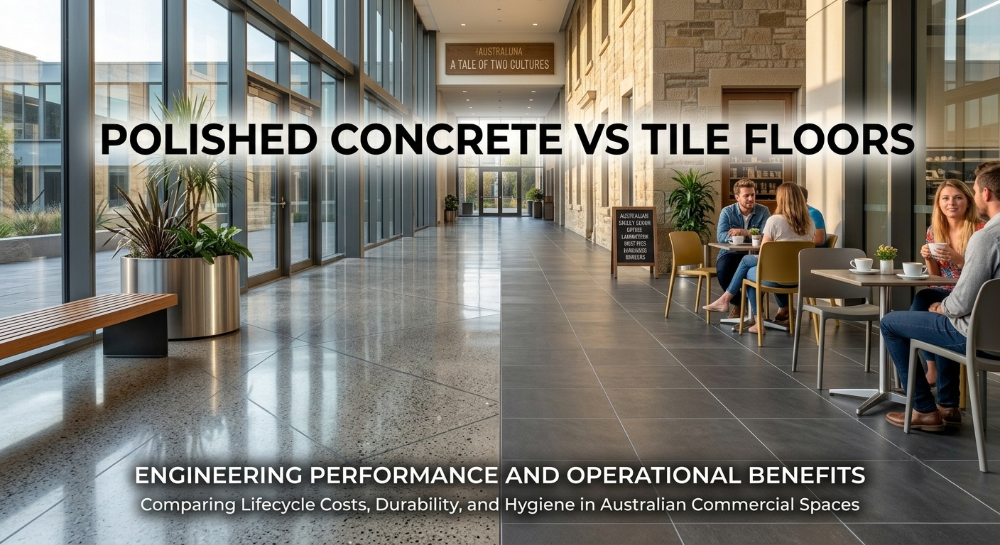
When specifying a high-performance floor for a commercial, industrial, or premium residential space, evaluating polished concrete vs tile floors is a critical step in your project planning. Because both finishes offer distinct hard-wearing benefits, facility managers and property owners frequently struggle to decide which option delivers the best long-term return on investment. To help you resolve this architectural dilemma, we have provided an in-depth comparison of these two prominent surface types, analysing their structural durability, lifecycle costs, and ongoing maintenance demands.
When choosing flooring for high-traffic environments, it is vital to make an informed, strategic decision. Your selected surface must blend seamlessly with your interior design while standing up to the rigorous physical demands of the environment. While every material carries distinct advantages, analysing polished concrete vs tile floors reveals that these two systems represent the peak of durable floor engineering in the Australian market.
The Engineering Profile of Polished Concrete Flooring Systems
Mechanical concrete polishing relies on progressive grinding, chemical densification, and progressive diamond abrasive refinement stages to transform a standard slab into a glass-like architectural asset.
Pros of Polished Concrete Flooring
Extreme durability and wear resistance represent the primary advantages of a professionally refined concrete slab. Unlike topical coatings or bonded coverings, a polished concrete surface will not delaminate, buckle, or lift under heavy machinery, forklift traffic, or heavy footfall, which is precisely why it is widely specified across Australian logistics hubs, retail spaces, and contemporary homes.
Furthermore, these floors are exceptionally straightforward to maintain. Routine care requires little more than a microfiber mop and water, with the occasional addition of a specialised, pH-neutral commercial cleaner to safely emulsify surface dirt and dust without dulling the gloss. By adhering to this simple routine, your floor preserves its high-performance finish for years. For sprawling industrial warehouses or large commercial pavilions, facility managers regularly engage specialised flooring contractors like Diamond Grind to manage automated scrubbing schedules.
Depending on your chosen gloss level and daily traffic exposure, your polished concrete flooring may require professional high-speed burnishing or a simple re-application of a penetrative sealer every few years. Available in an extensive range of aggregate exposure levels, cement stains, and architectural colours, this option offers permanent performance when executed correctly. It also serves as an outstanding substrate companion if you plan to integrate hydronic in-slab heating systems.
Cons of Polished Concrete Flooring
Despite the overwhelming benefits, a comprehensive analysis of polished concrete vs tile floors requires looking at structural limitations. Concrete is inherently rigid and unforgiving, which can cause fatigue for staff standing for extended shifts unless anti-fatigue mats are deployed. Additionally, if your facility lacks an insulated subfloor or adequate climate control, a concrete slab can feel cold underfoot during winter shifts.
Because concrete is a dense, high-mass material, it requires a structurally sound foundation and is generally limited to ground-floor applications. In massive, open-plan environments, bare concrete also reflects sound waves, potentially increasing ambient noise levels. However, this acoustic echo is easily mitigated once the space is populated with racking, inventory, furniture, or acoustic ceiling baffles. It remains a premier choice for the hospitality sector, manufacturing zones, and high-cube warehousing.
It is important to note that if your initial floor preparation is rushed or executed by an unvetted generalist, the slab may develop hairline micro-cracks over time. Fortunately, this structural vulnerability is easily rectified through professional polished concrete flooring restoration techniques that patch, densify, and re-polish the asset back to its original rating.
The Practical Performance of Commercial Tiled Flooring
Tile floors remain a deeply entrenched architectural option across Australia, manufactured in a staggering variety of dimensions, clay formulations, and surface glazes.
Pros of Tiled Flooring
Much like concrete, premium vitrified, porcelain, or natural stone tiles provide a hard-wearing surface capable of resisting moderate point loads. Because high-quality porcelain tiles are non-porous and highly water-resistant, they are a traditional choice for wet environments like commercial amenities, professional kitchens, and swimming pool surrounds. Natural stone variants, such as granite or bluestone, are equally durable and frequently utilised to transition seamlessly into external courtyard spaces.
Cons of Tiled Flooring
The primary operational drawback of any tile system centres around the grout matrix. Over months of rigorous cleaning, porous cementitious grout lines inevitably absorb moisture, grease, and dirt, causing severe discoloration. In moist or humid environments, keeping biological mould and bacteria out of these recessed grout joints requires significant, labour-intensive chemical scrubbing. According to the health and safety frameworks outlined by Safe Work Australia, maintaining immaculate hygiene in public-facing zones is paramount—a standard that recessed grout lines actively undermine.
Additionally, if the subfloor deflects or if an inferior batch of adhesive is used during installation, tiles can de-bond from the substrate. This causes individual units to “tent” or lift, creating a serious operational tripping hazard. Other significant drawbacks include the steep capital costs associated with natural stone, a high susceptibility to impact chipping from dropped tools, and the lengthy, multi-step installation timelines required to lay, grout, and cure the system.
The Ideal Compromise: Achieving a Concrete Tile Effect
When weighing the balance of polished concrete vs tile floors regarding initial capital outlay, ongoing maintenance overheads, and long-term durability, polished concrete emerges as the distinct operational winner. However, if your design brief demands the classic, gridded aesthetic of traditional tiling, you do not have to compromise on performance.
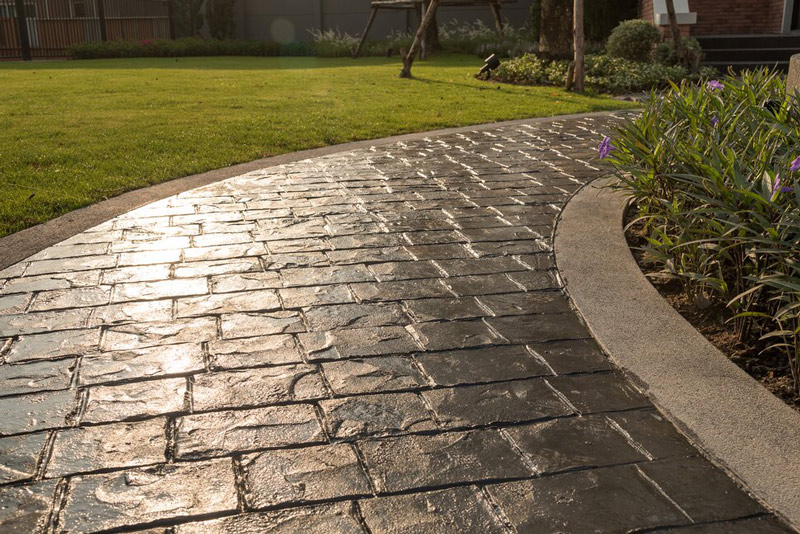
Diamond Grind can expertly “score, stamp, and colour” a continuous concrete slab to replicate a premium tile layout perfectly. This advanced technique allows your facility to enjoy the seamless, hygienic, and unbreakable benefits of polished concrete while retaining the exact visual grid pattern of a large-format tile floor. We deliver customised floor textures and bespoke gloss levels tailored precisely to your operational requirements.
Final Verdict on Polished Concrete vs Tile Floors
Selecting the correct floor system is an investment in your property’s long-term operational efficiency. Before making a final decision on polished concrete vs tile floors please feel free to contact us to discuss the specific physical and chemical demands of your site. Our engineering team is always ready to provide comprehensive site assessments, professional floor preparation, and tailored installation advice.
FAQ,s

Which option is more cost-effective when comparing polished concrete vs tile floors over time?
While basic ceramic tiles can have a lower initial supply cost, polished concrete is the clear long-term winner regarding total lifecycle costs. Tiles are prone to cracking, chipping, and tenting from subfloor movement, requiring expensive replacement pieces. Conversely, diamond-refined concrete utilizes your existing structural slab, eliminating the need to buy secondary materials and reducing maintenance expenses over a twenty-year horizon.
How do polished concrete vs tile floors compare when it comes to facility hygiene?
The main operational difference lies within the joints. Tile layouts require cementitious grout channels that are highly porous, easily absorbing water, oils, and bacteria while encouraging biological mould growth. Polished concrete provides a completely seamless, non-porous floor surface that leaves nowhere for contaminants to hide. This makes mechanical concrete polishing a much safer choice for commercial kitchens and medical environments.
Can you install underfloor heating under both polished concrete and tile options?
Yes, both flooring systems work exceptionally well with hydronic or electrical radiant underfloor heating. However, a solid concrete slab has superior thermal mass properties compared to thin tiles and adhesive beds. This means concrete absorbs, stores, and radiates warmth far more evenly across a large floor area, maintaining comfortable internal ambient temperatures for much longer intervals once the heat source is turned off.
Is it possible to get a tiled look while using a seamless concrete flooring system?
Absolutely. If you want the physical benefits of refined concrete but prefer a classic grid aesthetic, professional contractors can score and tint a continuous slab to match a large-format tile design. This specialized method gives you the high-impact resilience, ease of cleaning, and durability of a industrial floor while beautifully mimicking the exact architectural look of premium porcelain or natural stone tiles.
✅ Let's Talk — DiamondGrind
100% free consultation — no commitment required.