

Operating a successful restaurant, hotel, pub, or café across New South Wales requires managing heavy foot traffic, constant food and drink spills, and stringent health compliance standards. Specifying high-performance epoxy flooring for hospitality venues ensures your floors remain structurally sound, visually striking, and effortless to sanitize under intense commercial use.
At Diamond Grind, we work directly with venue managers, head chefs, and fit-out contractors to install seamless resin surfaces engineered for real-world commercial conditions. While traditional tiles crack under impact and trap grime within grout lines, professional epoxy flooring for hospitality spaces provides a durable, impervious barrier that protects your concrete substrate while keeping maintenance costs low.
The Operational Demands on Hospitality Floors
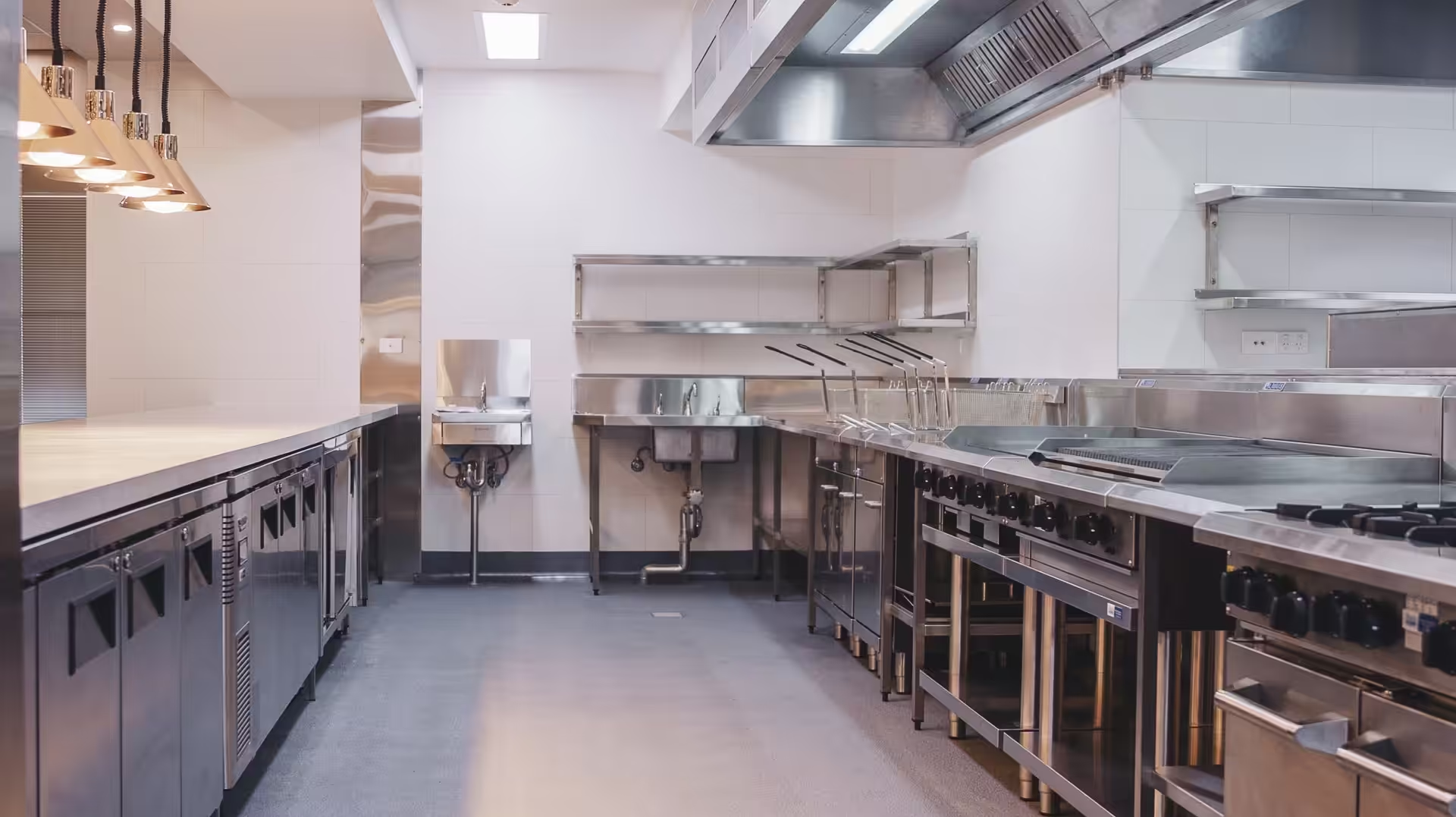
Venues in the service sector face daily physical and chemical challenges that rapidly degrade conventional residential or light-commercial floor coverings. Between front-of-house customer dining spaces and back-of-house commercial kitchens, flooring systems must handle continuous foot traffic, heavy equipment movement, aggressive cleaning agents, and thermal washdowns.
Investing in specialized hospitality industry flooring solutions prevents premature surface failure, costly operational downtime, and potential health code violations.
6 Reasons to Invest in Epoxy Flooring for Hospitality Venues
Whether you are fitting out a new bar, refurbishing a hotel foyer, or upgrading a busy kitchen line, seamless commercial resin systems deliver distinct functional and financial advantages.
1. Exceptional Resistance to Heavy Wear and Tear
In high-volume venues, constant foot traffic, dragging chair legs, and rolling delivery trolleys quickly wear down soft floor coverings. Commercial epoxy flooring for hospitality creates a dense, impact-resistant surface capable of enduring extreme mechanical abuse without chipping, flaking, or wearing thin in high-transit corridors.
2. Seamless Hygiene and Fast Cleaning
Strict food safety standards require floor surfaces that can be sanitized rapidly between shifts. Applying heavy-duty epoxy coatings eliminates porous grout lines and seams where grease, bacteria, and food residue collect. The non-porous finish prevents liquid absorption, allowing staff to mop up wine, coffee, and oil spills instantly with a neutral detergent.
3. Certified Anti-Slip Safety for Staff and Guests
Slips, trips, and falls present major liability risks in commercial kitchens, bar service areas, and restrooms. To maintain a safe working environment, commercial epoxy floors can be customized with graded aggregates (such as aluminium oxide or quartz sand) to achieve certified P4 or P5 slip ratings under Australian Standards, ensuring foot traction even when wet.
4. Design Versatility to Match Your Venue’s Aesthetic
From warm, ambient dining rooms to modern industrial craft breweries, epoxy flooring for hospitality offers endless visual flexibility. Commercial epoxy systems can be tailored using custom colour pigments, decorative vinyl flake blends, metallic finishes, or subtle matte sheens. Light-reflective tones can also brighten dimly lit bar areas, reducing artificial lighting demands.
5. Superior Resistance to Mould, Bacteria, and Moisture
Standing water, steam cleaning, and spilled liquids create ideal breeding conditions for mould and fungal growth beneath traditional floor coverings. Because seamless resin forms a completely bonded, non-porous layer over the slab, moisture cannot penetrate beneath the surface, ensuring long-term environmental hygiene and structural integrity.
6. Fast Turnaround Times to Minimize Business Downtime
Shutting down a profitable venue for floor repairs directly impacts your bottom line. Professional trade applicators utilize rapid-curing commercial resin formulations—including polyaspartic and fast-cure epoxy systems—that allow full foot traffic within hours, ensuring your kitchen or dining room reopens without lengthy delays.
Professional Substrate Preparation: The Key to Longevity
An epoxy coating is only as strong as its bond to the underlying concrete. Applying resin over weak, unground, or oil-contaminated concrete guarantees premature peeling and delamination under commercial traffic.
At Diamond Grind, our installation process always begins with thorough mechanical surface preparation using dust-free diamond grinding. By removing old coatings, opening the concrete pores, and repairing surface spalls, we establish an unbreakable mechanical bond before applying the resin system.
If your venue has an existing coating that is worn or failing, our team provides complete epoxy flooring restoration services—grinding back the damaged layer, filling cracks, and reapplying high-grade epoxy flooring for hospitality clients to restore a flawless finish.
Consult NSW’s Commercial Epoxy Flooring Specialists
Choosing the right specification for your venue depends on your specific traffic levels, chemical exposure, and aesthetic preferences. Working with experienced trade contractors ensures your project complies fully with Australian Building Codes and food safety regulations.
Diamond Grind provides complete turn-key solutions—from initial site inspection and mechanical surface prep to floor levelling and final coat application—for commercial venues across Sydney, Newcastle, and the Central Coast. Installing premium epoxy flooring for hospitality premises is one of our core specialties. Contact our team today to discuss your project or request a detailed site evaluation via our contact page.
Looking to explore alternative high-performance options for wet processing zones? Read our technical breakdown on resin flooring systems or discover how polished concrete finishes compare in commercial spaces.
FAQ,s

Why is epoxy flooring for hospitality venues better than traditional tiles?
Epoxy flooring provides a completely seamless, non-porous surface, whereas tiles rely on cementitious grout lines that absorb grease, harbour bacteria, and crack under heavy equipment impact. Epoxy is easier to clean, handles heavy foot traffic without chipping, and eliminates tile grout maintenance entirely.
Can epoxy flooring in commercial kitchens be made slip-resistant?
Yes. Commercial epoxy floors can be customized during installation with specialized anti-slip aggregates (such as silica sand or aluminium oxide) to meet Australian slip-resistance requirements (up to P5 ratings). This ensures high traction in wet washdown zones and prep areas.
How long does it take to install epoxy flooring in a restaurant or kitchen?
A standard commercial epoxy installation typically takes between 2 to 4 days, depending on the venue size, substrate condition, and curing requirements. Rapid-cure resin options (such as polyaspartic coatings) can be applied for faster turnarounds to minimize operational downtime.
Is epoxy flooring resistant to hot spills and commercial cleaning chemicals?
Yes. Commercial-grade epoxy and polyurethane screeds are formulated to withstand high-temperature water washdowns, organic food acids, grease, and heavy-duty commercial cleaning detergents without staining, softening, or peeling.
✅ Let's Talk — DiamondGrind
100% free consultation — no commitment required.